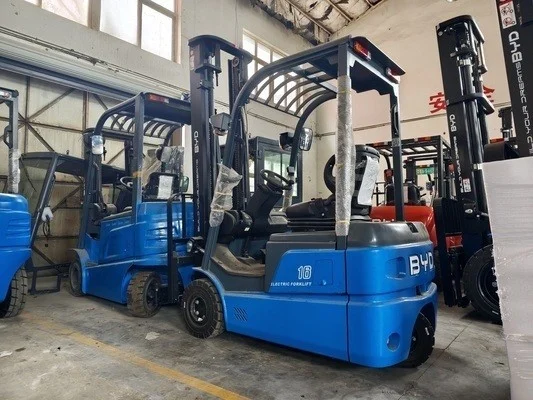
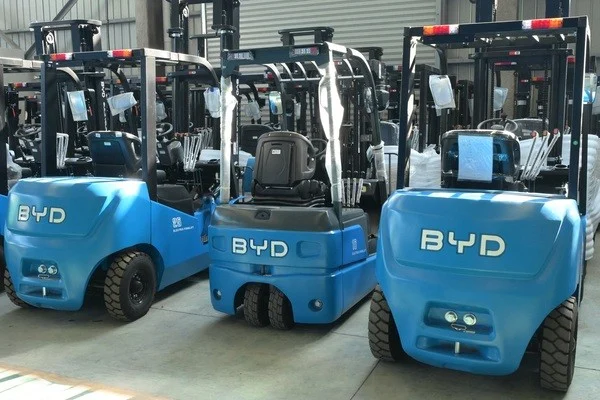
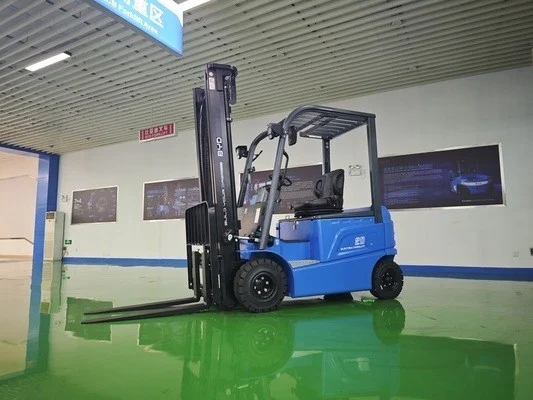
How Many Types of Forklift Are There: Narrowing the Choice to Four-Wheel Counterbalance Electric Models by Load Center, Lift Height, and Battery Configuration
News 30/10/2026
Forklift types are usually grouped by power source, operator position, and load-handling design. That gives a long list: diesel, gas, and electric units; seated and stand-on models; warehouse trucks and yard trucks. The practical question behind “how many types of forklift are there” is narrower: which configuration fits one real job. This article takes warehouse and factory transfer work as the working context and explains how load center, lift height, and battery configuration narrow the field to a four-wheel counterbalance electric forklift.
Why the Type Count Matters Less Than the Duty Cycle
Most published type lists mix categories. A machine can be electric, four-wheel, counterbalance, and cushion-tire all at once, so counting types produces numbers that do not help a buyer. A better method is to start from the duty cycle: what is lifted, how high, how far, how often, and on what surface.
Warehouse and factory transfer work generally involves palletized goods moved between trailers, racking, and staging areas. A four-wheel counterbalance electric forklift is a common general-purpose choice here because the counterweight lets it pick loads from floor level and place them at height, and the four-wheel layout suits paved indoor floors and yards. That does not make it universal. Very narrow aisles, very high racking, and pure horizontal pallet movement may point to other designs, and those limits are worth stating plainly.
The three variables that decide the configuration
- Load center: the horizontal distance from the fork face to the load’s center of gravity. Rated capacity applies at a stated load center, and capacity falls as that distance grows.
- Lift height: the height the load must reach. Higher lift generally reduces remaining capacity and changes mast choice.
- Battery configuration: voltage, capacity, and whether the battery is fixed or swappable, matched to shift length and charging arrangements.
These three interact. A load that is fine at low height with a short load center may exceed capacity once extended to a high rack beam with a long pallet. Buyers who compare only the headline capacity number often miss this.
Load Center and Lift Height: Reading the Capacity Plate Correctly
The capacity plate on a counterbalance truck states a rated load at a specified load center, often 500 mm or 600 mm. The number is not a blanket limit. It applies to that load center and that mast configuration. Add an attachment, use a longer pallet, or lift to full height, and the safe working load changes.
How to check load center in practice
Measure the actual load, not the pallet’s nominal size. A pallet loaded with the weight concentrated toward the fork tips has a longer effective load center than one loaded evenly. Ask the supplier to confirm the derating curve: how much capacity remains at the load center and lift height you actually use. If the answer is a single number with no conditions, ask again.
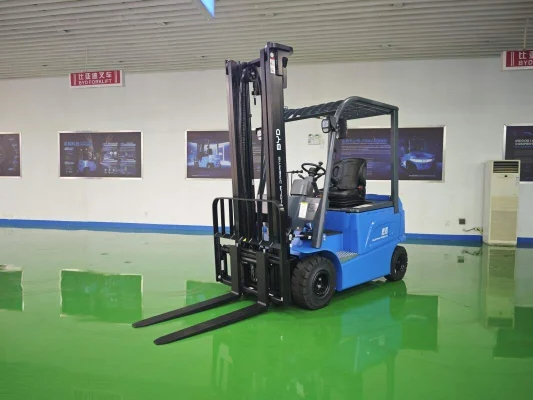
How lift height changes the choice
Lift height affects mast type, free lift, and overhead clearance. A warehouse with low doorways may need a mast that lifts without extending above the collapsed height. A facility with high racking needs a mast rated to that height with capacity confirmed at that height. The relevant check is not “what is the maximum lift” but “what load can be handled at my highest shelf level.”
Where racking is very high or aisles are very narrow, a four-wheel counterbalance model may not be the efficient answer. It is honest to say so rather than force the application. The counterbalance design trades aisle width for versatility at floor level and in trailer loading.
Battery Configuration and the Working Environment
Electric counterbalance trucks are commonly offered with lead-acid or lithium-ion batteries. The choice affects shift planning, charging space, and maintenance routines. It should be made from the actual schedule, not from a general preference.
Questions that shape the battery decision
- How many hours does the truck run per shift, and are there multiple shifts?
- Is there a dedicated charging area with suitable ventilation and electrical supply?
- Can the truck be charged during breaks, or must it run continuously?
- Is battery swapping needed, and does the truck design support it?
- What ambient temperatures apply in storage, operation, and charging?
Lithium-ion configurations often allow opportunity charging during breaks, which can suit multi-shift operations where a single battery must cover the day. That is a general characteristic, not a guarantee for every model. Actual runtime depends on load, lift height, travel distance, and the manufacturer’s battery specification. Confirm those figures with the supplier rather than assuming a number.
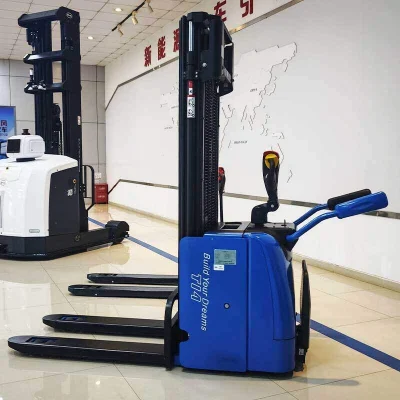
Temperature deserves specific attention. Cold storage and freezer work raise questions about usable battery capacity, charging limits, condensation, and hydraulic fluid suitability. Those limits must come from the manufacturer’s documentation. Without that documentation, the correct step is to list the parameters to verify, not to estimate them.
Comparison table: parameters, risks, and what to confirm
| Parameter | Why the operation cares | What to confirm with the supplier |
|---|---|---|
| Rated capacity at stated load center | Overloading risks tip-over and damaged racking | Capacity at your actual load center and lift height; derating curve |
| Lift height and mast type | Must reach the highest shelf safely | Remaining capacity at full height; collapsed height and overhead clearance |
| Battery voltage and capacity | Determines runtime and charging plan | Runtime under your duty cycle; charging time; opportunity-charging guidance |
| Operating and charging temperature range | Affects cold-store or outdoor use | Documented limits for truck, battery, and charger; cold-store options if offered |
| Aisle width and turning radius | Determines whether the truck can work the layout | Dimensions with the chosen mast and tires; minimum aisle guidance |
| Floor and ramp conditions | Affects traction, braking, and tire choice | Recommended tire type; gradeability figures with load |
Treat every row as a question, not an assumption. Standard, optional, and special-order features differ between models and markets, and only the manufacturer’s data sheet settles which applies.
Frequently Asked Questions
Does a four-wheel counterbalance electric forklift suit every warehouse?
No. It is a versatile general-purpose choice for floor-level picking, trailer loading, and pallet transfer on paved surfaces. Very narrow aisles, very high racking, and long-distance horizontal transport may favor other designs. Match the truck to the layout before committing.
Can I use the rated capacity at any lift height?
Usually not. Rated capacity is stated at a specific load center and mast configuration. Capacity generally decreases as load center and lift height increase. Confirm the derating data your application requires.
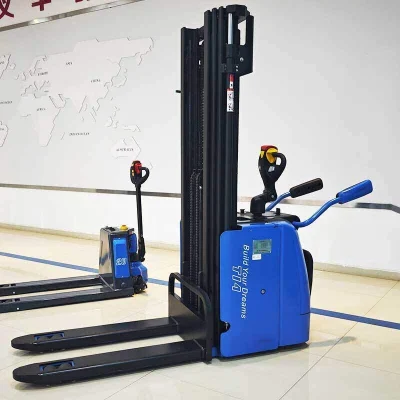
Is lithium-ion always the better battery choice?
Not automatically. Lithium-ion can support opportunity charging and may reduce battery changes, but the right choice depends on shift length, charging infrastructure, temperature conditions, and budget. Compare documented runtime and charging data from the supplier.
What should I prepare before requesting a quotation?
Gather the maximum load weight and its dimensions, the highest lift height, aisle widths, floor and ramp conditions, shift schedule, charging location, and ambient temperature range. These details let the supplier recommend a configuration rather than guess. Buyers considering a four-wheel counterbalance electric forklift can share these figures to narrow model and battery options.
How do attachments affect the choice?
Attachments add weight and move the load center forward, which reduces remaining capacity. The attachment supplier and the truck manufacturer should both confirm the combined rating. Do not assume the base truck’s capacity still applies.
Before purchase, complete a short checklist: measured load weight and load center, highest shelf height, narrowest aisle, floor and ramp data, shift pattern, charging arrangements, and temperature limits. Then ask the supplier to confirm capacity at your actual conditions, the battery runtime basis, and which features are standard versus optional. That exchange turns a long list of forklift types into one defensible configuration decision.