Forklift Types With Pictures: What Load Capacity and Lift Height Specs to Confirm Before Buying a Four-Wheel Counterbalance Electric Forklift
News 30/10/2026
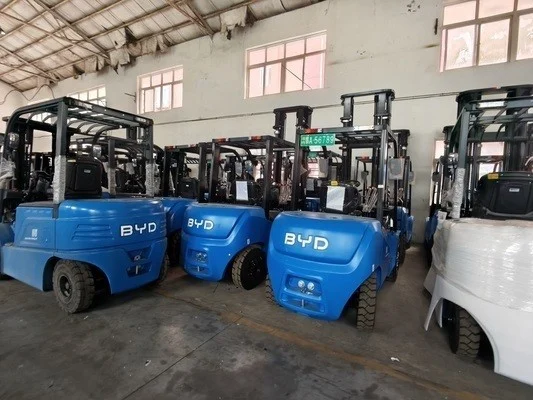
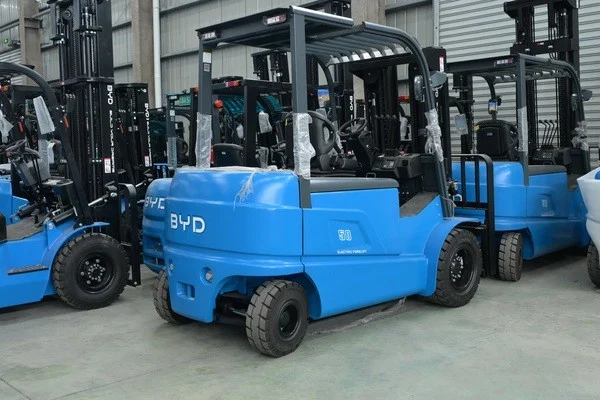
“Forklift types with pictures” searches usually start with a shape question and end with a specification question. The pictures help you recognize a four-wheel counterbalance electric forklift; the numbers decide whether that truck can do your job. Before you request a quotation, confirm load capacity, lift height, load center, and the conditions that change all three: attachment weight, aisle width, floor surface, and charging arrangements. This guide covers the specification checks that matter when you buy a four-wheel counterbalance electric forklift.
How to Read Forklift Pictures Without Misreading the Specs
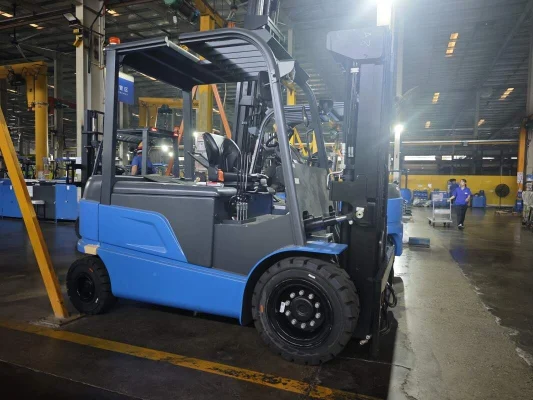
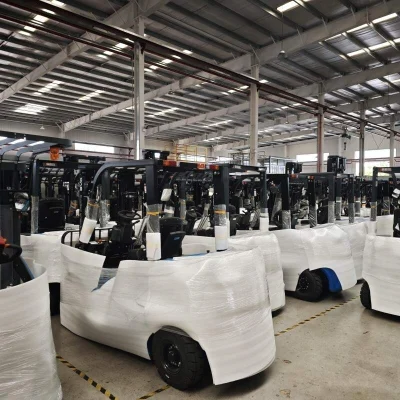
Photos and line drawings are useful identification aids, but they rarely show the information a buyer needs. A side-view illustration of a four-wheel counterbalance electric forklift shows the mast, the counterweight, and the drive and steer axles. It does not show rated capacity at height, derating curves, or battery voltage.
Use pictures to answer type questions, then move to the data sheet. Three details are easy to miss in a photograph:
- Mast type: a two-stage mast and a three-stage mast can look similar at rest but differ in collapsed height and free lift, which affects doorways and container work.
- Attachment: a side shifter or fork positioner adds weight ahead of the carriage, and that weight reduces usable capacity.
- Chassis and counterweight: a compact counterbalance truck may have a shorter wheelbase and a lighter counterweight than a standard model, with lower capacity as a result.
Treat any image without a model number and a capacity plate as illustrative only. The plate on the truck, together with the manufacturer’s technical data, is the reference point.
Specification Checks Before You Request a Quotation
Collect your own operating data first, then compare it with the manufacturer’s published figures. The list below is the minimum set a supplier needs to propose a configuration.
Load capacity and load center
Rated capacity is stated at a defined load center, commonly 500 mm or 600 mm, measured from the front face of the forks to the center of gravity of the load. A load whose center sits farther forward reduces the capacity the truck can safely handle. Confirm the rated capacity and the load center at which it applies, then check the capacity at your maximum lift height rather than at ground level.
Ask two questions: what is the heaviest load, and what is its actual center of gravity when sitting on the forks? Pallets with overhanging loads, drums, and long crates often shift the center forward.
Lift height and mast choice
Record three heights: the maximum height you must reach, the collapsed height of the mast, and the overhead clearance along every route. A mast that reaches the top rack but cannot pass a doorway is not a workable choice. Also confirm free lift if you enter containers or trailers with low openings.
Capacity falls as lift height increases on most counterbalance trucks. If your heaviest load goes to your highest rack, say so in the inquiry; the supplier can then check the derated capacity rather than the headline figure.
Dimensions, aisle width, and floor conditions
Measure the narrowest aisle and the turning radius you can accept, including clearance for pedestrians and racking. Note floor surface, thresholds, dock plates, and ramp gradients. Slopes and uneven floors affect stability and braking, so describe them rather than assuming a standard warehouse layout.
Battery, charging, and shift pattern
State how many hours the truck runs per shift and whether opportunity charging is possible during breaks. Charger location, available power supply, and ventilation all shape the battery and charging configuration. Provide these facts instead of asking which battery is “best.”
Attachments and optional equipment
List any side shifter, fork positioner, or special fork length you need. Attachments change the load center and the residual capacity, so they belong in the initial specification discussion, not in a later add-on.
Frequently Asked Questions
Does rated capacity apply at every lift height?
No. Rated capacity is normally quoted at a specific load center and often at a specific height. Capacity typically decreases as the load center moves forward or the load is raised. Ask the supplier to confirm the capacity at your maximum lift height and with your intended attachment fitted.
What measurements should I send with a quotation request?
Send the heaviest load and its dimensions, the load center if known, maximum lift height, collapsed mast height, narrowest aisle, floor and ramp conditions, shift length, charging windows, and any attachment requirements. A site sketch or photographs of the storage area help the supplier check mast and chassis fit.
Can I compare capacity figures between different models directly?
Only when the load center, lift height, and attachment are the same. A higher headline capacity at a shorter load center may give less usable capacity than a lower figure quoted at your actual load center. Compare like with like, and ask what conditions each figure assumes.
What should I check at delivery?
Confirm the model, battery type and voltage, mast type, attachment, and the capacity plate against the agreed specification. Verify the rated capacity and load center shown on the plate, and check that the mast reaches the required height with the specified load. Record any discrepancy before accepting the truck.
Pictures tell you which type of truck you are looking at; the specification sheet tells you whether it fits. Gather the load, height, aisle, floor, and charging data first, then ask the supplier to confirm each figure against the published technical data for the proposed configuration. If you are evaluating a four-wheel counterbalance electric forklift from our range, share your operating conditions and we can help you check the matching capacity, mast, and battery options.