Clarify Similar Forklift Types With Pictures: Visual Side-by-Side Comparison Distinguishing Design and Operational Differences That Inform Industrial Equipment Selection
News 10/10/2026
Many first-time equipment buyers and new warehouse managers struggle to tell similar forklift types apart when browsing product listings or touring equipment yards. Visual side-by-side comparisons highlight core design and operational differences, helping decision makers narrow options quickly. Below we break down the most commonly confused pairs, outline clear visual identifiers, share selection guidance, and answer common questions.
Most Commonly Confused Forklift Pairs: Key Visual Differences
Counterbalance Forklift Vs. Reach Truck
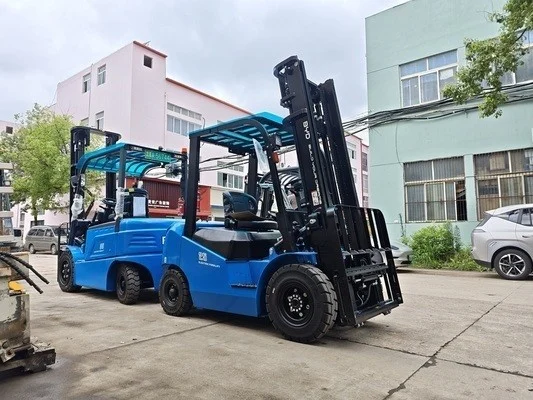
This pair tops the list of common mix-ups, both handle standard pallet loads, but design and use cases differ dramatically. Visually, counterbalance forklifts feature a heavy counterweight built into the rear of the unit body. This weight balances load held at the front forks. You will not see extended forward legs on the unit base, so the forklift can approach loading docks directly. Counterbalance units work well outdoors on paved ground, and handle a wide range of load sizes.
Reach trucks include extended outrigger legs at the front of the unit. These legs stabilize the truck when lifting loads to high racking levels, and the mast moves forward to reach into deep racking. The front outriggers are the easiest visual identifier you can spot immediately. Reach trucks operate exclusively indoors on smooth flat concrete, and can not navigate uneven outdoor ground.
Pallet Jack Vs. Walkie Stacker
Both are walk-behind units, so new staff often mix the two up. Visually, pallet jacks only feature low-lift forks, with maximum lift height usually staying under 8 inches. The frame sits close to the ground, built to move pallets across short distances. Walkie stackers add a vertical mast that lifts forks up to 10 feet or higher, so you can stack pallets multiple levels high. The front mast is the clearest visual distinction between the two.
Operationally, pallet jacks handle horizontal transport only. Walkie stackers support both horizontal transport and vertical stacking. Walkie stackers require more aisle clearance and carry higher upfront costs than standard pallet jacks.
Sit-Down Rider Forklift Vs. Stand-Up Rider Forklift
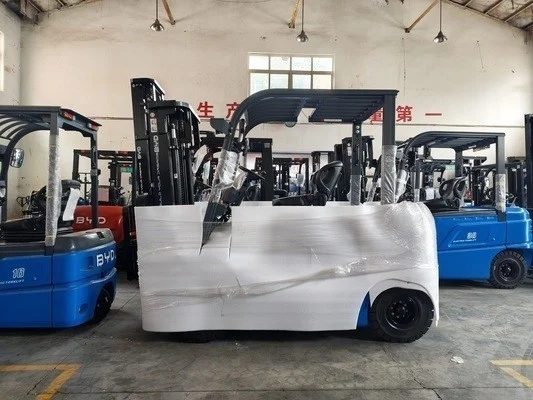
Both support rider operation, and serve regular warehouse transport needs. The clearest visual difference centers on the operator compartment. Sit-down models include a full padded seat with dedicated leg space for the operator. Stand-up models feature a small platform where the operator stands, with no full seat.
Design differences drive use case differences: stand-up models have narrower frames, so they fit well into tight aisle spaces common in high-density racking systems. Sit-down models offer greater comfort during long multi-hour shifts, and work better for longer transport runs or outdoor operation. If your facility has aisles under 11 feet wide, stand-up models fit most layouts. If operators work continuously on the forklift for multiple hours, sit-down models reduce operator fatigue.
Selection Guidance Based On Your Facility Requirements
Start your selection process by mapping all core tasks your new forklift completes. List key facility constraints: aisle width, floor condition, indoor versus outdoor operation, and maximum lift height you require. Use the visual identifiers from our comparison above to narrow your options quickly.
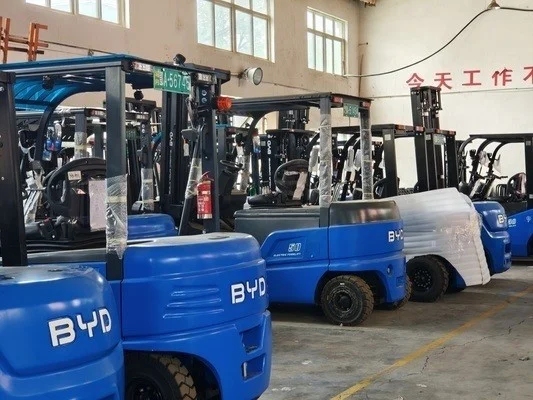
Common mistakes to avoid: Picking a reach truck to use on uneven outdoor ground, as its outriggers can catch on cracks or uneven terrain, creating safety hazards. Another common mistake: Overbuying a high-capacity sit-down forklift when a manual pallet jack meets your daily task requirements, which wastes operational capital. Always match the unit size and capability to your most frequent tasks, not rare one-off jobs.
Visual comparison cuts through confusing marketing language, and highlights clear differences between similar-looking models. Always test any unit you consider inside your own facility before final purchase, to confirm it fits your space and task requirements.
Frequently Asked Questions
Which forklift type works best in small warehouses?
Narrow aisle stand-up reach trucks or electric pallet jacks work well in most small warehouse spaces. Both fit into tight aisles, handle common load sizes, and do not take excess storage space when not in use.
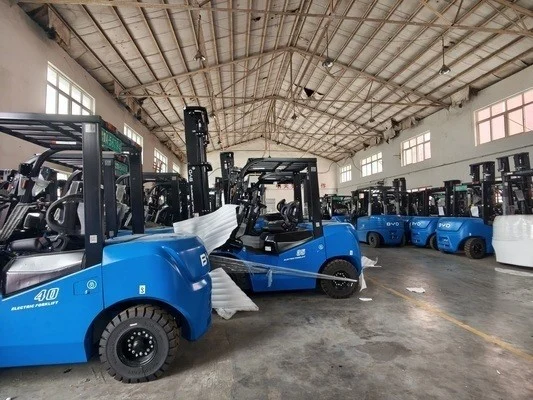
Can I use an indoor forklift outside?
Most indoor forklifts use electric motors and low-ground-clearance designs, so they can not handle uneven ground or consistent exposure to wet outdoor conditions. Some specific models carry outdoor ratings, always check manufacturer specifications before operating any unit outside.
How do visual identifications speed up equipment selection?
Clear visual features (like front outriggers, operator compartment design, mast presence) let you quickly sort through online listings or in-yard equipment. This process eliminates mismatched options in minutes instead of hours spent parsing dense technical specifications.
Are electric forklift designs different from internal combustion models?
Yes, most electric forklifts have more compact frames, with no external exhaust pipe or large rear fuel tank. Internal combustion models often have larger rear compartments to hold fuel tanks and engine components, making them visually distinct from equivalent capacity electric models.