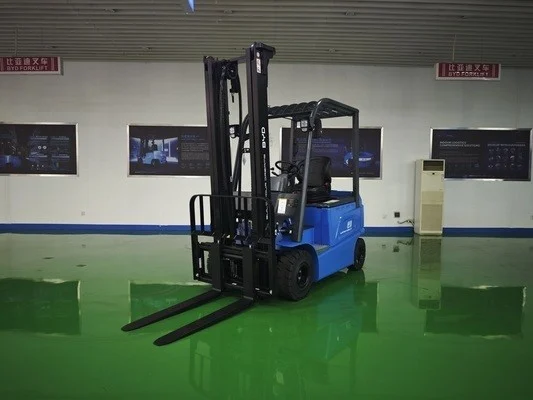
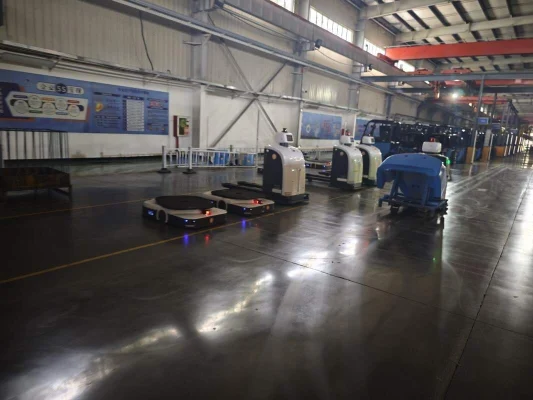
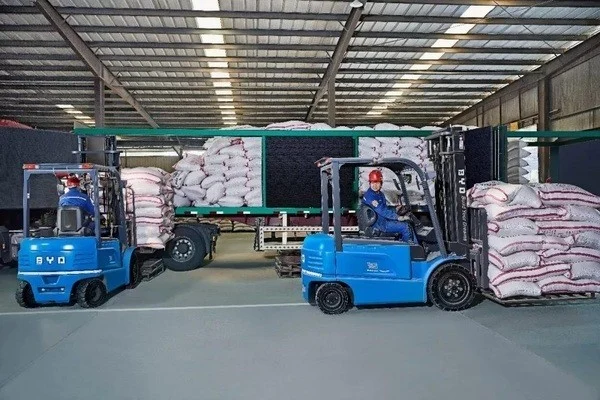
Four-Wheel Counterbalance Electric Forklift Procurement: Verifying Battery, Charger and Site Power Capacity Before Signing Off
News 08/11/2026
Signing a purchase order before confirming the energy side of a four-wheel counterbalance electric forklift is one of the most expensive shortcuts in industrial procurement. A truck that matches the load and lift height can still fail daily duty if the battery, charger and building supply do not align with the shift pattern. This guide covers the checks that belong in the technical annex and the acceptance checklist, so the equipment you order can actually be charged and operated on your site.
Start With the Duty Cycle, Not the Datasheet
Battery and charger sizing follows from how the truck will work, so document the duty cycle before discussing any model. Useful inputs include:
- Shift length and number of shifts per day, including breaks and idle periods.
- Loads handled, lift heights and travel distances per shift.
- Whether opportunity charging is acceptable or a full charge between shifts is required.
- Ambient temperature in the charging area and any restrictions on ventilation.
These figures let a supplier propose a battery capacity and charger output that suit the real workload. Ask the supplier to state the assumptions behind the recommendation in writing. If your operation varies seasonally, describe both the peak and average weeks; a configuration that only covers the average may leave you short during busy periods.
Battery Checks to Put in the Technical Annex
When the truck is a lithium battery model, confirm the battery voltage, capacity and physical dimensions against the truck’s specification sheet. The battery must be the type approved for that truck, and the supplier should confirm the interface between battery, truck controller and charger. Ask these questions before signing:
- What battery capacity does the supplier recommend, and on what duty-cycle assumptions?
- Is the battery removable or fixed, and does your maintenance routine require removal?
- What charging window does the recommended battery need to return to full availability?
- What documentation accompanies the battery, and what does the warranty cover?
Do not accept capacity figures without the test conditions that produced them. If a supplier cannot explain how a capacity or runtime figure was derived, treat it as unverified and request clarification. Where a specification is not supplied in the manufacturer’s technical data, state that it remains to be confirmed rather than filling the gap with an estimate.
Charger and Site Power Capacity Verification
The charger is where procurement projects most often stall, because the building supply may not match the charger’s requirements. Collect the following from the charger datasheet and from your facility team, then compare them side by side:
| Item to verify | Source | Why it matters |
|---|---|---|
| Input voltage and phase | Charger datasheet; site electrical survey | A mismatch may require electrical work or a different charger |
| Input current and circuit rating | Charger datasheet; panel schedule | Determines whether existing circuits can carry the load |
| Charging position and cable length | Site layout | Affects where the truck can be parked while charging |
| Ventilation and temperature | Facility assessment | Charging equipment needs suitable operating conditions |
| Connector type and compatibility | Charger and battery datasheets | Prevents an unusable combination on delivery |
Have a qualified electrician confirm available capacity at the planned charging location. If several trucks will charge in the same area, total the simultaneous demand rather than looking at each charger alone. Record the agreed charging arrangement in the contract so responsibility is clear if site work is needed.
Acceptance Checklist and Common Sign-Off Mistakes
Before final acceptance, verify the delivered configuration against the order: battery type and capacity, charger model, connector, voltage and phase. Confirm that the commissioning handover includes operating instructions and the relevant documentation. A short supervised trial on your own duty cycle, run under normal site conditions, gives more useful evidence than a demonstration on a supplier’s floor.
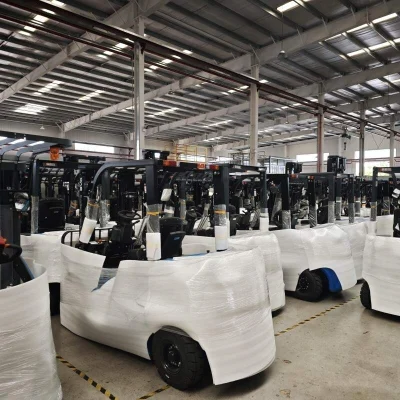
Frequent mistakes include ordering a charger that the site supply cannot support, assuming a standard charging window without checking shift patterns, and leaving battery and charger responsibilities split between suppliers with no single point of accountability. Another common error is treating quoted runtime as a guarantee; it depends on load, route, temperature and operator behaviour, so treat it as an estimate until your own trial confirms it.
If you are comparing options, share your actual loads, lift heights, shift pattern and charging location with the supplier and ask which four-wheel counterbalance electric forklift configuration fits those conditions. That conversation, backed by the checks above, is a sounder basis than a headline price.
Frequently Asked Questions
Can I use an existing charger with a new lithium battery truck?
Only if the charger is confirmed compatible with that battery and truck by the manufacturers. Voltage, connector and charging profile all need to match. Ask for written confirmation rather than relying on a visual similarity between plugs.
How do I know whether my building supply is adequate?
Compare the charger’s input requirements with your panel capacity and the demand of other equipment on the same circuits. A qualified electrician should verify this on site; datasheet figures alone do not confirm available capacity.
What should the purchase contract specify about charging?
Name the battery and charger models, the connector type, the charging location, and who is responsible for any electrical work. Include the documentation to be handed over at commissioning and the conditions of the warranty.
Is a trial run worth requesting before final payment?
Yes, where the supplier agrees. A trial on your own duty cycle and site conditions tests the whole combination of truck, battery and charger, and any shortfall can be addressed while commercial leverage remains.