What Types of Forklifts Are There: Battery, Charging, and Duty Cycle Questions Buyers Should Ask Before Choosing a Four-Wheel Counterbalance Electric Forklift
News 31/10/2026
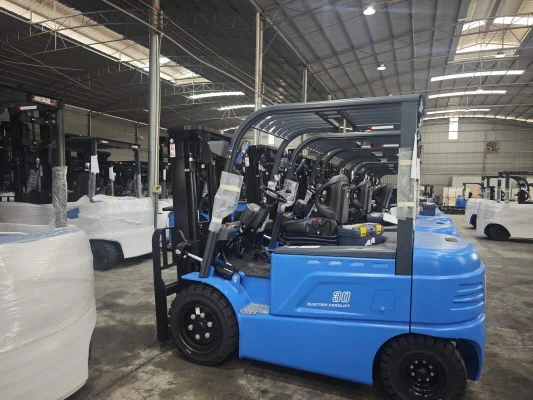
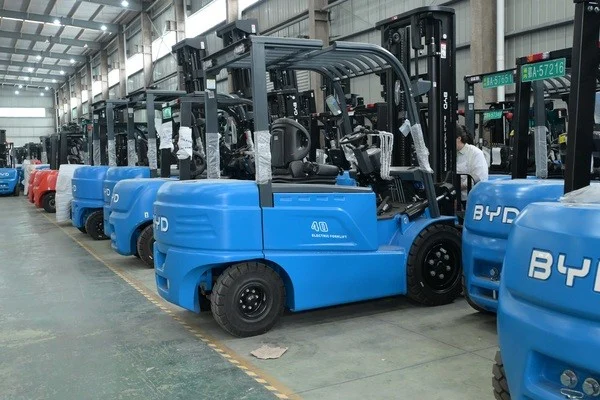
Buyers often start with the question of what types of forklifts are there, then discover that the harder decisions sit inside one category: the four-wheel counterbalance electric forklift. Within that category, battery chemistry, charging arrangements, and duty cycle shape whether a truck fits your operation. The questions below help you gather the right facts before requesting a configuration or a quotation.
Start With the Work, Not the Label
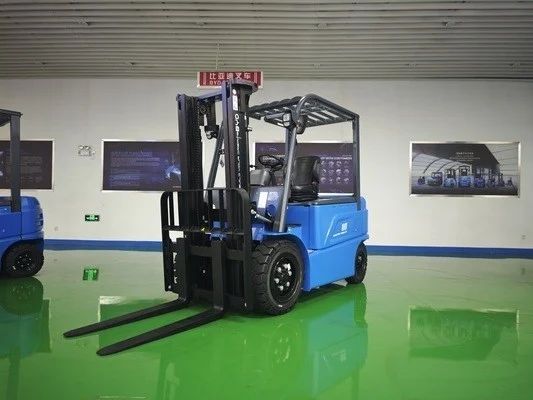
A four-wheel counterbalance electric forklift is a common general-purpose choice in factories, loading areas, and warehouse transfers because it can lift loads in front of the operator and travel between zones. That does not make it correct everywhere. Before discussing battery or charger options, confirm the basics below and write them down as a requirements sheet.
- Maximum load weight, including attachments and load center distance
- Required lift height and lowered fork height
- Aisle width, turning space, and door or gate clearances
- Floor condition, ramps, and slope gradients along the route
- Shift length, number of shifts, and idle time between moves
- Indoor, outdoor, or mixed use, plus dust, moisture, or cold exposure
- Available charging location and electrical supply
Each item changes the specification. A truck that meets the load figure but cannot turn in the aisle, or that suits one shift but not three, is a mismatch regardless of battery type.
Battery Choices and What They Demand
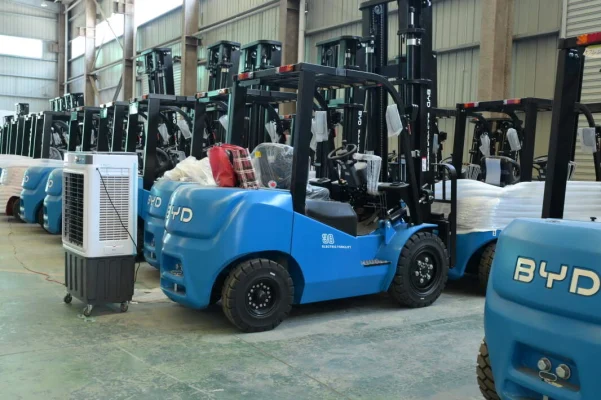
Electric counterbalance trucks generally run on lead-acid or lithium-ion batteries. Both are established technologies; the right choice depends on how you operate, not on a universal ranking.
Lead-acid batteries
These are widely used and familiar to many maintenance teams. They typically need a dedicated charging area with ventilation, and they usually require watering and equalizing routines. Because a lead-acid battery generally needs a cooling period after charging before it returns to service, operations that run continuous shifts often rely on spare batteries and a change procedure. Confirm the manufacturer’s charging and maintenance instructions rather than assuming a schedule.
Lithium-ion batteries
Lithium-ion packs are commonly associated with opportunity charging, meaning short charges during breaks. That can reduce the need to swap batteries, but it depends on charger capacity, pack size, and the actual energy consumed per shift. Ask the supplier to explain the charging window, the recommended depth of discharge, and the temperature limits that apply to the specific pack. Do not treat opportunity charging as a guarantee of unlimited runtime.
Questions to put to the supplier
- Which battery options are available with the model you are quoting?
- What charger capacity and supply voltage does each option require?
- What charging routine does the manufacturer recommend?
- What maintenance tasks fall to our team, and how often?
- What information do you need from us to estimate energy use per shift?
None of these answers should be guessed. Where a figure is not in the technical data, ask the supplier to state the test conditions behind it.
Charging Infrastructure: The Overlooked Cost
Charging is a site decision as much as a truck decision. A charger needs a suitable power supply, protection, ventilation where required, and a position that keeps cables and equipment out of traffic routes.
Points to verify on site
- Available voltage and current at the proposed charging position
- Distance from the charging point to the work area
- Whether charging can happen during breaks or only after the shift
- Ventilation and fire precautions required by local rules
- Who will manage charging, and how it will be recorded
In a hypothetical two-shift operation, a buyer might find that one charging window per shift is realistic but two would disrupt material flow. That finding belongs in the requirements sheet before the truck configuration is fixed. It may point toward a larger battery, a different charging routine, or a spare-battery arrangement, but only the supplier’s data can confirm which is workable.
Duty Cycle and Load Centre: Matching the Truck to the Shift
Duty cycle describes how hard the truck works: load weight, lift height, travel distance, frequency of lifts, and the proportion of time spent moving. A truck rated at a given capacity is rated under stated conditions, often including a specific load centre distance. Carrying a load whose centre sits farther from the fork face reduces the capacity the truck can safely handle. Ask the supplier to confirm the rated capacity at your actual load centre and lift height.
| Operating pattern | What to clarify | Why it matters |
|---|---|---|
| Short, frequent lifts in one area | Lift frequency and average load | Affects heat build-up and energy use |
| Long travel routes between zones | Route length, floor, and slopes | Affects energy consumption and travel performance |
| High lifts with heavy loads | Load centre and mast specification | Affects rated capacity and stability |
| Cold or dusty environments | Temperature range and contamination | Affects battery behaviour and component protection |
Treat the table as a prompt list, not a specification. The numbers that matter come from your operation and the manufacturer’s published data.
Technical Data and Acceptance Points to Confirm
A quotation is easier to compare when both sides work from the same checklist. Ask the supplier to confirm each item in writing, and mark anything that remains open.
- Model, rated capacity, load centre, and lift height
- Battery type, capacity, and charger specification
- Mast type, fork dimensions, and any attachment
- Tyre type and suitability for your floor and outdoor use
- Dimensions, turning radius, and aisle requirement
- Operator training, manuals, and spare parts availability
- Warranty terms and what they exclude
- Delivery, commissioning, and acceptance checks
At acceptance, verify that the delivered configuration matches the agreed sheet, that the charger operates as specified, and that the operator has received the handover information. Record any deviation before signing off.
Frequently Asked Questions
Is a four-wheel counterbalance electric forklift suitable outdoors?
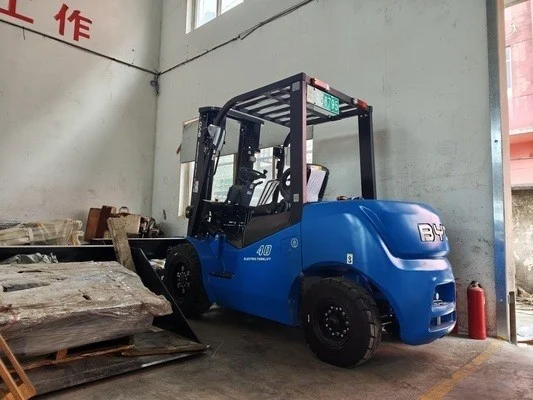
It can be, depending on tyre type, floor surface, weather exposure, and the manufacturer’s stated limits. Share your route and surface conditions with the supplier and ask which configuration is intended for them.
Can lithium-ion batteries be charged during breaks?
Opportunity charging is commonly offered with lithium-ion packs, but the acceptable routine depends on the specific battery and charger. Ask for the recommended charging window and any temperature limits.
How do I know which capacity I need?
Capacity depends on load weight, load centre, and lift height, not load weight alone. Provide all three to the supplier so the rated capacity can be confirmed against your actual conditions.
What should I include in an initial enquiry?
Send your load weights, lift heights, aisle and route details, shift pattern, floor and slope conditions, and charging supply information. These details let the supplier propose a configuration instead of a generic model.
If you are comparing options, the most useful next step is a written requirements sheet covering load, lift, route, duty cycle, and charging. Share it with our team to discuss a four-wheel counterbalance electric forklift configuration that matches those conditions.