Different Forklift Types in Four-Wheel Counterbalance Electric Fleets: A Pre-Purchase Checklist Covering Duty Cycle, Load Centre, and Charging Windows
News 12/11/2026
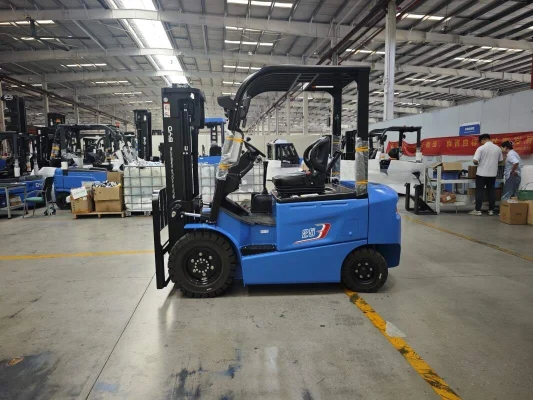
When buyers compare different forklift types, the useful question is not which model looks strongest on a spec sheet but which configuration matches the work the truck will actually do. In a four-wheel counterbalance electric forklift fleet, that match rests on three numbers that are easy to overlook during an initial inquiry: the duty cycle, the load centre, and the charging window available between shifts. This checklist explains what to collect before requesting a quotation, what to confirm with the supplier, and where a configuration may not suit the application.
Start With the Duty Cycle, Not the Truck
Duty cycle describes how hard the truck works across a shift: hours of active operation, number of lifts, travel distance, ramp use, and the share of time spent lifting near rated capacity. Two operations with the same load weight can place very different demands on a battery and drivetrain.
Before comparing models, record the following:
- Shift length and the number of shifts per day, including breaks when the truck is idle.
- Lifts per hour and the typical lift height distribution, not only the maximum height.
- Average and peak travel distances, plus any ramps and their gradients.
- Attachment use, because a clamp or side-shifter changes the effective load and load centre.
- Seasonal peaks that temporarily raise throughput.
These figures let a supplier judge whether a standard battery capacity is adequate or whether opportunity charging or a second battery is worth discussing. Without them, any capacity recommendation is a guess.
Load Centre and Capacity: The Pairing That Decides Safety
Rated capacity is stated at a specific load centre, usually the distance from the fork face to the centre of gravity of the load. A load whose centre of gravity sits farther out reduces the capacity the truck can safely handle at that height. This is why a truck rated at a given figure on the data plate may not be suitable once a wide load or an attachment is added.
Collect these details during the inquiry:
- Load dimensions and the position of the centre of gravity, not just the weight.
- Maximum lift height required, and whether full capacity is needed at that height.
- Pallet or container types, since overhang changes the effective load centre.
- Any attachment and its own weight, which the supplier must account for.
Ask the supplier to confirm capacity at the actual load centre and lift height you need, and to state the derating that applies. Treat a capacity figure quoted without these conditions as provisional. The manufacturer’s technical data remains the reference point; this article does not substitute published specifications.
Charging Windows and Fleet Availability
Charging determines whether the truck is ready when the next shift starts. Map the available windows honestly: a lunch break, an overnight period, or a short gap between shifts. Then confirm with the supplier what charging pattern the proposed battery and charger support, and how long a full charge takes under your site conditions.
Questions worth putting in writing:
- How many hours of operation does the proposed configuration deliver under your duty cycle?
- Does the charging equipment suit your site’s power supply, and what electrical work is needed?
- Is a spare battery practical, and does the truck design support swapping it safely?
- Where will charging take place, and does that location meet ventilation and safety requirements?
If the charging window is shorter than the recharge time, the fleet plan needs adjusting: more trucks, a different charging approach, or a revised shift pattern. Confirm these points rather than assuming a fast charge will cover the gap.
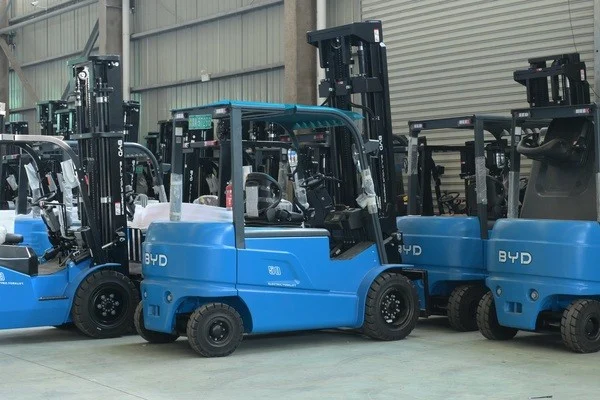
A Pre-Purchase Checklist You Can Send to Suppliers
Use the table below to organise an inquiry. It separates what you know from what the supplier must confirm.
| Item | What to Provide | What to Confirm |
|---|---|---|
| Duty cycle | Shift hours, lifts per hour, travel distances, ramps | Expected operating hours per charge under these conditions |
| Load | Weight, dimensions, centre of gravity, attachment | Rated capacity at your load centre and lift height |
| Lift height | Typical and maximum heights | Capacity retention at maximum height |
| Aisle and floor | Aisle width, surface type, gradients | Turning and gradeability data from the technical sheet |
| Charging | Available windows, power supply, charging location | Charger compatibility, recharge time, battery options |
| Acceptance | Site rules, operator training needs | Delivery checks, documentation, warranty terms |
This checklist applies to four-wheel counterbalance electric trucks. Other designs, such as reach trucks or pallet movers, serve narrower roles, and this article does not recommend them; if your application seems to need one, raise it with the supplier so the boundary is clear.
Frequently Asked Questions
Can one four-wheel counterbalance electric forklift cover two shifts?
It depends on the duty cycle and the charging window. Two shifts with long gaps and moderate lift counts may suit a single truck with opportunity charging, while continuous heavy use may need a second truck or a battery change. The supplier should confirm this against your recorded figures rather than a general rule.
Why does the load centre change the rated capacity?
The load centre is the horizontal distance from the fork face to the load’s centre of gravity. A greater distance increases the turning moment on the truck, so the safe capacity falls. Always quote the actual load centre when asking about capacity.
What if my aisle width is tight?
Check the truck’s dimensions and turning data against the measured aisle, allowing clearance. If the aisle is narrower than a counterbalance truck can work in safely, discuss the constraint with the supplier instead of assuming a larger model will fit.
Which documents should accompany a quotation?
Ask for the technical data sheet covering capacity at stated load centres, lift heights, battery and charger details, and the warranty terms. Verify that the quoted configuration matches the conditions in your checklist before comparing prices.
To move from checklist to configuration, share your measured duty cycle, load details, lift heights, aisle dimensions, and charging windows with our team. We can then discuss which four-wheel counterbalance electric forklift configuration suits those conditions and which parameters still need verification.