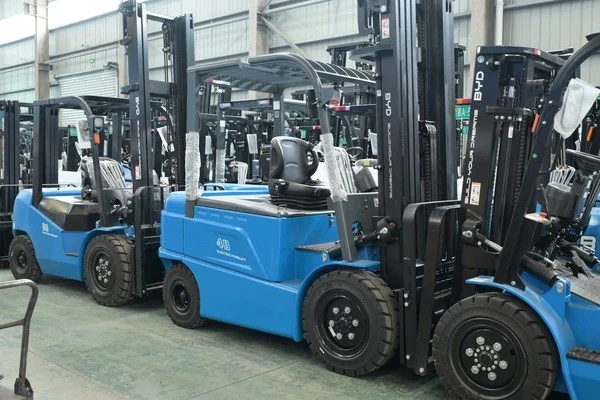
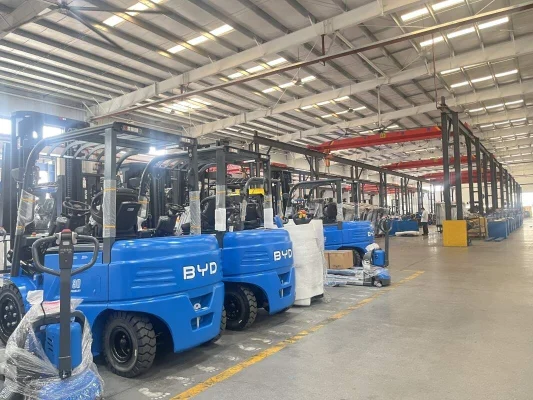
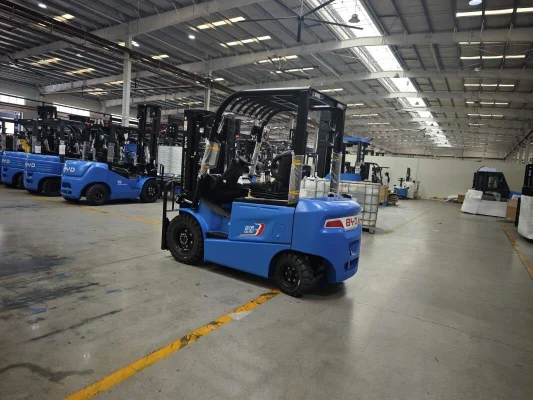
Matching BYD Electric Forklift Capabilities to Your Warehouse and Distribution Center Operational Needs
News 06/10/2026
As more warehouse and distribution center operations shift toward electric material handling equipment, BYD electric forklifts have emerged as a popular option thanks to the brand’s in-house lithium iron phosphate battery technology. Matching available capabilities to your specific operational needs helps you avoid unnecessary upfront costs and ensures your new equipment supports daily throughput demands. This guide breaks down core BYD electric forklift capabilities, common application fits, selection criteria, and key limitations to support your decision making process.
Key Core Capabilities of BYD Electric Forklifts
Lithium Iron Phosphate Battery Technology
BYD builds its electric forklifts around its own in-house lithium iron phosphate (LiFePO4) battery packs. This technology delivers consistent power output across full shift operation, eliminates maintenance tied to lead-acid battery changes, and supports opportunity charging during break periods. Unlike lead-acid units, these battery designs do not require dedicated charging room ventilation, freeing valuable warehouse space.
Capacity and Lift Height Ranges
BYD offers electric forklift models covering load capacities starting at 1 ton up to 8 tons, with lift heights reaching up to 7 meters across most standard warehouse configurations. Different frame sizes accommodate narrow aisle, standard aisle, and outdoor loading dock applications.
Emission and Noise Profile
Zero tailpipe emission output makes these units ideal in indoor operation alongside working staff. Lower noise levels compared to internal combustion models support operations in distribution centers located near residential areas or during overnight shifts.
Match Capabilities to Common Operational Scenarios
Narrow Aisle High Density Storage Warehouses
If your facility uses narrow aisle racking to maximize storage density, you need compact BYD electric forklift models with turn radius engineered to fit tight spaces. These models deliver the lift height needed to access top rack levels, and their zero emission profile lets them operate safely in enclosed storage areas.
High Volume Distribution Centers
Facilities moving hundreds of loads daily rely on BYD’s high-capacity models with opportunity charging support. Opportunity charging during driver breaks eliminates mid-shift battery swaps, keeping up with continuous load movement demands. LiFePO4 batteries hold up better under frequent charge cycles compared to traditional lead-acid options, extending service intervals.
Mixed Indoor-Outdoor Loading Operations
Many facilities move loads between outdoor truck docks and indoor storage areas. BYD electric forklifts with sealed electric components handle light outdoor exposure during inclement weather, though they are not engineered to support continuous operation in heavy rain or unimproved off-road terrain.
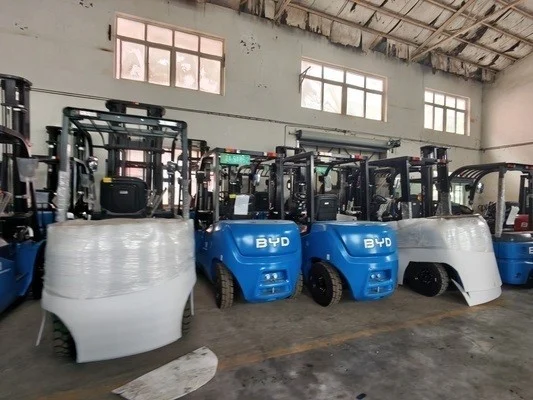
Key Selection Criteria
Before choosing a BYD electric forklift, assess these core factors to align model capabilities with your operational needs:
Daily Load Volume and Shift Length
Multi-shift operations require models with larger battery capacity or on-site opportunity charging infrastructure. Smaller operations with single-shift use can select lower-capacity battery models that match their daily energy needs.
Aisle Width and Rack Configuration
Measure your minimum aisle width before selecting a model. Narrow aisle configurations require reach stacker or compact counterbalance models built specifically to accommodate tight turning radii. Standard aisle layouts can accommodate full-size counterbalance BYD electric forklifts with higher load capacities.
Maximum Load Weight
Always document the heaviest load your team regularly handles. BYD offers models matched to every common load weight range, from small palletized goods to heavy bulk shipments. Oversizing capacity adds unnecessary upfront cost, while undersizing causes premature component wear.
Key Limitations to Consider
Even with strong core capabilities, BYD electric forklifts have limitations that impact certain use cases:
Upfront purchase cost is higher than comparable internal combustion forklifts and lead-acid battery electric models, though lower long-term operating costs often offset this difference over time.
Extreme cold storage environments below -20°C require specialized battery configurations not available on all standard BYD electric forklift models. You must confirm specialized cold storage options before purchasing units serving frozen goods warehouses.
Continuous outdoor operation in harsh weather exceeds the design parameters of most standard BYD electric forklift models, leading to faster component degradation.
Frequently Asked Questions
Do BYD electric forklifts work within cold storage warehouses?
Some BYD models offer specialized cold storage configurations, but standard units do not perform well in sub-freezing temperatures below -20°C. Confirm specialized options with your local BYD dealer before purchasing equipment supporting cold storage operations.
Can I use a BYD electric forklift outdoors?
Standard BYD electric forklifts handle short trips across paved loading docks and light outdoor exposure. They are not engineered to support continuous outdoor operation in heavy rain, snow, or off-road conditions.
How often do I need to replace the BYD electric forklift battery?
BYD LiFePO4 batteries typically deliver several years of service under normal operating conditions, with lifespan tied to charge cycle frequency and operating environment. Exact replacement timelines vary based on your specific use case.
Do BYD electric forklifts require special charging infrastructure?
Most models support standard on-board charging compatible with common facility power outlets. Higher capacity models may require dedicated higher-voltage connections, which you should confirm with your dealer prior to installation.
Concluding Next Steps
Matching BYD electric forklift capabilities to your operational needs starts with a full audit of your facility layout, daily load volume, shift schedules, and common operating environments.
Document your maximum load weight, minimum aisle width, and any special environmental requirements, then share this information with your authorized BYD forklift dealer to identify the model that best fits your needs. Test operation of your selected model within your facility before finalizing purchase, to confirm it meets all your daily operational demands.