Four-Wheel Counterbalance Electric Forklift Procurement: Clarifying Load Center, Fork Length, and Upright Rating Before You Compare Quotes
News 12/11/2026
Comparing quotes on an electric forklift truck is only useful once every supplier is pricing the same machine. Load center, fork length, and upright rating are the three specification points that most often differ between offers that look comparable on the first page. A quote written around a 500 mm load center and a 3,000 mm duplex mast describes a different machine from one written around a 600 mm load center and a 4,500 mm triplex mast, even when both list the same nominal capacity. This article explains what each figure controls, how the three interact, and which details to confirm with each supplier before you treat two prices as equivalent.
Why These Three Figures Decide Whether Quotes Are Comparable
Nominal rated capacity is a conditional number. It applies at a stated load center, with a stated mast type and lift height, and often with a stated attachment configuration. Change any of those conditions and the safe capacity at the fork tips changes with them. A four-wheel counterbalance electric forklift is a counterweighted machine: the load sits ahead of the front axle, and the stability of the whole unit depends on the relationship between load weight, load distance, and the counterweight behind the rear axle.
That is why procurement teams who compare only capacity and price frequently end up with machines that cannot handle the actual load at the actual height. The practical fix is to write your requirement in terms of the load itself, then ask each supplier to confirm the machine against that requirement. The three figures below are the vocabulary you need to do that.
Load Center: The Reference Point Behind Every Capacity Rating
The load center is the horizontal distance from the vertical face of the fork to the center of gravity of the load, measured along the fork. Standard ratings are usually quoted at a specific load center, commonly 500 mm or 600 mm depending on the region and the machine class. When the actual load center is greater than the rated one, the machine’s allowable capacity falls; the load is acting further from the front axle and produces more overturning moment.
How to Measure Your Actual Load Center
Load center is a property of the load, not of the forklift. To estimate it, measure the depth of the load as it will sit on the forks and identify where its center of gravity falls. A uniformly dense pallet load of consistent depth has its center of gravity near the middle of that depth. Loads that are not uniform, such as a pallet with a heavy item at the front, a drum, or a load held in an attachment, need their own assessment. If the load is deeper than the rated load center, the rated capacity no longer applies directly.
Two practical checks matter here. First, confirm the load center each supplier used in their quote; a capacity figure without a stated load center is incomplete. Second, ask what capacity the quoted machine offers at your measured load center and lift height, not only at the standard reference point. Suppliers who build four-wheel counterbalance electric forklifts can normally provide a capacity derating table or a data plate reference, but the exact figures must come from their technical documentation.
Attachments and Load Center
Any attachment that moves the load forward, such as a side shifter, fork positioner, or clamp, increases the effective load center and adds its own weight. Attachments therefore usually reduce net capacity, and the reduction must be reflected in the rating. If your process needs an attachment, state it in the inquiry so the supplier can quote the correct residual capacity rather than the bare-machine rating.
Fork Length: Matching the Load, Not Just the Pallet
Fork length affects both load support and load center. Forks that are too short leave part of the load unsupported, which can damage the pallet and shift the effective center of gravity forward. Forks that are much longer than needed add weight, can contact loads behind the target pallet, and may increase the machine’s overall dimensions in tight aisles.
A common starting point is to choose fork length close to the depth of the load, so the forks support most of the pallet depth without protruding excessively. The exact choice depends on pallet depth, load rigidity, and whether the load is handled at the pallet or at the product. Confirm with the supplier that the quoted fork length is compatible with the rated load center they have stated; the two are linked, and a longer fork does not automatically increase capacity.
- Measure pallet depth and the depth of the load as actually stacked.
- Note whether loads are handled singly or in pairs.
- Check aisle and door widths if longer forks would change the machine envelope.
- Ask whether the quoted capacity assumes the standard fork length or the one you requested.
Upright Rating: Lift Height, Residual Capacity, and Mast Choice
The upright, or mast, is rated not only by its maximum lift height but by the load it can carry at that height. Residual capacity typically decreases as lift height increases, because the mast structure and the raised load change the stability envelope. A machine rated at a given capacity on the data plate may carry less at full lift height, particularly with a tall mast.
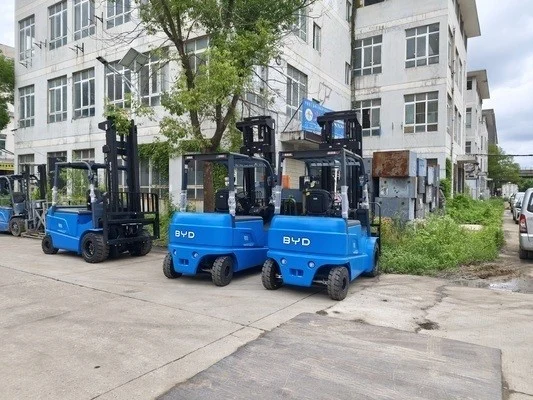
Mast type also matters. Duplex masts generally suit lower lift heights and can offer good forward visibility and a lower collapsed height. Triplex and other full-free-lift configurations suit higher stacking and container work, where the forks need to reach height inside a confined opening. Each configuration has trade-offs in collapsed height, visibility, weight, and cost, and the right choice depends on your racking heights, door openings, and whether you work inside containers.
| Specification point | What it controls | What to confirm with each supplier |
|---|---|---|
| Load center | Capacity at a given load distance | The load center used in the quote and the capacity at your measured load center |
| Fork length | Load support and effective load center | Whether the quoted capacity assumes standard or requested fork length |
| Upright rating | Lift height and residual capacity at height | Rated capacity at your maximum lift height and the mast type quoted |
Building a Comparison-Ready Inquiry
The fastest way to make quotes comparable is to give every supplier the same structured requirement. A useful inquiry states the load weight, the load dimensions and estimated load center, the required lift height and any free-lift need, the aisle and door dimensions, the floor and ramp conditions, the shift pattern, and the charging arrangements available on site. It should also state whether attachments are needed and whether loads are handled in containers or at height.
When quotes return, check that each one repeats your stated conditions rather than a generic standard rating. Where a figure is missing, ask the supplier to supply it in writing against their technical documentation. Treat any capacity number without a load center and lift height as provisional. This is also the point to discuss configuration with a supplier who builds four-wheel counterbalance electric forklifts, since battery type, charger, and mast specification all affect the final machine and should be agreed before pricing is finalized.
One limitation worth stating plainly: published ratings and derating tables are only as good as the assumptions behind them. Site conditions such as floor flatness, ramp gradients, and load stability can reduce safe working capacity further, and those conditions should be assessed on site before the machine is put into service.
Frequently Asked Questions
Does a higher nominal capacity always mean a stronger machine?
No. Nominal capacity is tied to a stated load center and lift height. A machine with a higher headline figure at a short load center may carry less than a lower-rated machine at your actual load center and lift height. Compare capacity at your own conditions, not at the standard reference point.
Can I increase capacity by fitting longer forks?
Generally no. Longer forks add weight and can move the effective load center forward, which reduces rather than increases allowable capacity. Fork length should be matched to load depth, and the capacity rating should be confirmed against the fork length actually supplied.
Why does capacity drop at higher lift heights?
Raising the load changes the stability envelope of the machine and loads the mast structure differently. Manufacturers therefore publish residual capacity at height. Ask for the rated capacity at your maximum lift height rather than assuming the data plate figure applies at every height.
What should I send a supplier before requesting a quote?
Send load weight, load dimensions and estimated load center, required lift height, free-lift needs, aisle and door dimensions, floor and ramp conditions, shift pattern, charging arrangements, and any attachment requirements. With those details, suppliers can quote a specific configuration rather than a generic model, and you can compare offers on equal terms.