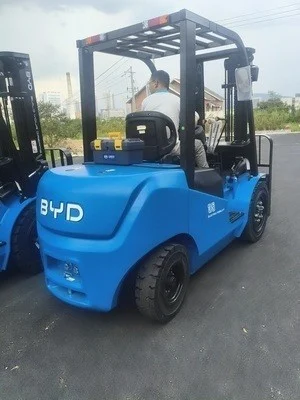
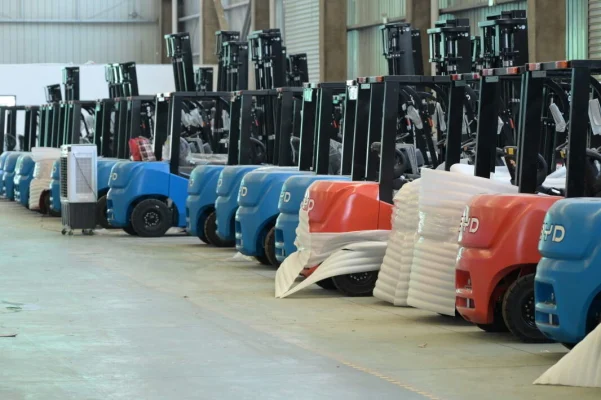
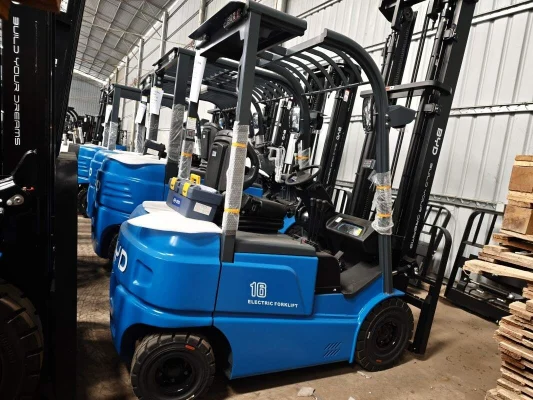
Four-Wheel Counterbalance Electric Forklift Procurement: Matching Load Charts, Lift Height, and Battery Specs to Your Actual Handling Tasks
News 04/11/2026
A four-wheel counterbalance electric forklift is a common general-purpose choice in factories, loading areas, and warehouse transfer work. The procurement decision rarely fails because of the truck alone; it fails because the load chart, lift height, and battery specification were chosen from a catalogue rather than from the actual handling task. This guide explains which figures to collect, which questions to put to a supplier, and which items to confirm before you accept a quotation. It focuses on four-wheel counterbalance electric trucks, including lithium-battery models.
Start with the Task, Not with the Truck
Before comparing models, write down what the truck will actually do. The following details change the specification more than any brand comparison:
- Load: the heaviest load, including pallet, packaging, and any attachment weight, plus the load center (the horizontal distance from the fork face to the load’s center of gravity).
- Lift height: the height at which the load must be placed or retrieved, not just the height it must reach.
- Access: aisle width, door openings, floor condition, ramps, and gradients along the route.
- Duty cycle: hours per shift, number of lifts per hour, and whether the truck runs one, two, or three shifts.
- Charging conditions: available power supply, charging area, and whether opportunity charging is possible between breaks.
These are the inputs a supplier needs to propose a configuration. Without them, any quoted capacity or lift height is only a nominal figure.
Reading a Load Chart Correctly
A load chart links rated capacity to load center and, on many trucks, to lift height. The rated capacity printed on the truck usually applies at a stated load center, often 500 mm or 600 mm. If your pallet places the center of gravity farther out, the safe capacity decreases, and the chart should show that reduction.
Three practical checks help during procurement:
- Compare the chart’s stated load center with your real load center, including any non-standard pallet or attachment.
- Confirm whether the capacity figure holds at your maximum lift height; some charts reduce capacity as the mast rises.
- Ask whether the figures apply to the mast and fork carriage actually quoted, since attachments can change the rating.
If the supplier’s chart does not cover your load center or lift height, ask them to confirm in writing rather than extrapolating. Treat a capacity figure without a stated load center as incomplete.
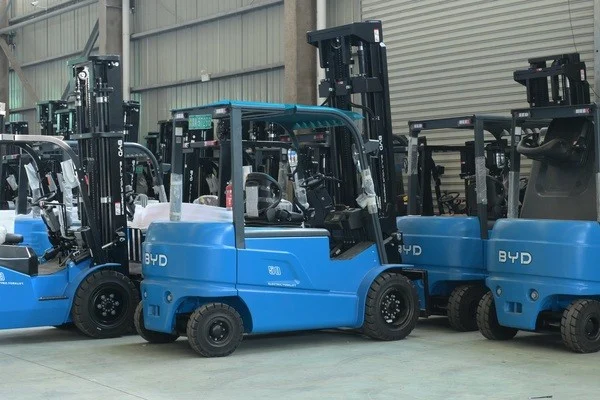
Lift Height, Mast Choice, and Overhead Limits
Lift height requirements should come from the racking or stacking point, with a small clearance margin. The mast type then follows: a two-stage mast suits lower stacking, while three-stage or full-free-lift masts help where overhead clearance is tight, such as inside containers or under mezzanines. The trade-off is that taller masts can reduce residual capacity and increase the truck’s overall height when lowered.
Also record the overhead obstructions along the route, including door frames, sprinkler lines, and roof trusses. A mast that fits the rack but not the doorway creates a problem no load chart will reveal. Ask the supplier to state the lowered mast height, the extended height, and the free-lift value if relevant to your building.
Battery and Charging Specifications to Confirm
Battery voltage, capacity, and chemistry should follow the duty cycle and charging pattern, not the other way round. Lithium-battery models can support opportunity charging in many configurations, but the acceptable charging window, charger rating, and expected battery management behavior should come from the manufacturer’s technical documentation, not from general assumptions.
Items to confirm before ordering:
- Battery voltage and rated capacity, and whether the quoted capacity matches your shift pattern.
- Charger type, input power, and charging time, together with the space and ventilation the charging area needs.
- Whether the battery can be charged during breaks, and any limits the manufacturer sets on that practice.
- Battery handling and replacement arrangements if the truck runs multiple shifts.
Where documentation is not yet available, list these points as open questions in the inquiry instead of accepting verbal estimates.
Inquiry, Acceptance, and Documentation Checklist
A useful inquiry gives the supplier the task data and asks for a written configuration. The table below summarizes what to send and what to request back. It is a general procurement aid, not a substitute for the manufacturer’s published specifications.
| Item | What to provide or request |
|---|---|
| Load data | Maximum load, load center, pallet type, attachment weight |
| Lift data | Required lift height, racking type, overhead clearance |
| Site data | Aisle width, floor surface, ramps, door openings |
| Duty data | Shifts per day, lifts per hour, charging windows |
| Configuration | Mast type, fork length, battery and charger specification |
| Documents | Load chart, specification sheet, charging instructions, warranty terms |
At acceptance, check that the delivered mast, forks, battery, and charger match the agreed configuration, and that the load chart supplied with the truck reflects the fitted equipment. Confirm operator training and daily inspection routines as part of handover. If your operation includes ramps, uneven floors, or very narrow aisles, raise these early; a four-wheel counterbalance truck may not suit every layout, and the supplier should say so rather than force a fit.
To move from general guidance to a concrete proposal, share your load, lift height, aisle, and shift details with our team so we can discuss a suitable four-wheel counterbalance electric forklift configuration within our range.
Frequently Asked Questions
Does rated capacity apply at every lift height?
Not necessarily. Many load charts reduce capacity as load center distance or lift height increases. Check the chart at your actual load center and maximum lift height rather than relying on the headline rating.
How do I know whether a lithium battery suits my shift pattern?
Compare your hours per shift and charging windows with the manufacturer’s stated charging guidance. Ask the supplier to confirm the battery capacity and charger rating against your duty cycle in writing.
What aisle width should I measure?
Measure the narrowest point along the route, including turns, doorways, and areas where pedestrians pass. Give the supplier this figure along with the load dimensions so the truck and mast can be checked against it.
Can one truck cover both indoor and outdoor work?
It depends on floor surface, gradients, weather exposure, and tire choice. Describe both environments in the inquiry so the supplier can confirm whether a four-wheel counterbalance electric truck is appropriate or whether conditions need adjustment.