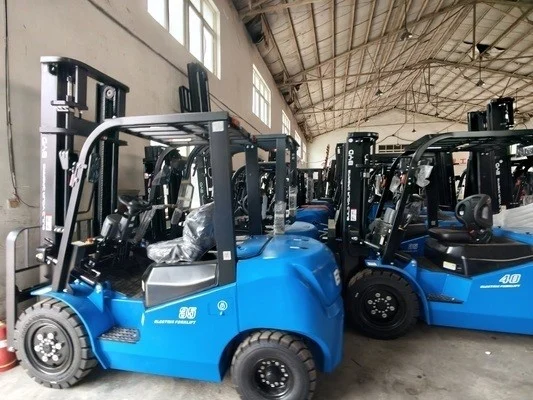
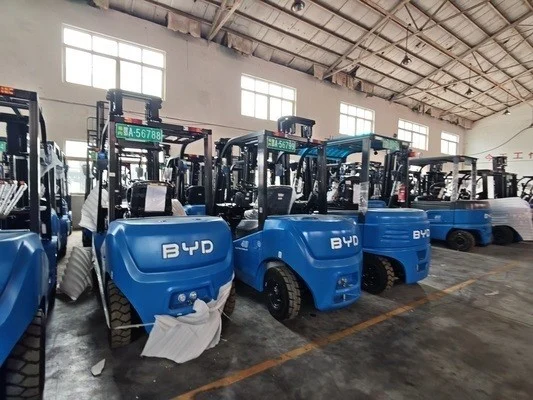
Tire Selection and Floor Interaction: Configuring a Four-Wheel Counterbalance Electric Forklift Truck for Mixed Indoor and Outdoor Surfaces
News 01/11/2026
Mixed indoor and outdoor work is one of the harder duty cycles to configure. A four-wheel counterbalance electric forklift truck that runs smoothly on a sealed warehouse floor may lose traction on a damp loading apron, and a tread aggressive enough to grip gravel will often mark a polished concrete aisle. Tire selection is therefore not a cosmetic choice; it is a trade-off between traction, floor protection, ride comfort, and the surfaces the truck actually crosses each shift. This guide sets out the conditions that determine a sensible choice, the points to confirm before ordering, and the limits that no tire can remove.
Start With the Surface Route, Not the Tire Catalog
Before comparing compounds or tread patterns, map the route the truck follows on a typical shift. Tire choice follows from that route, not the other way round. Useful questions include:
- Sealed versus unsealed surfaces: Is most travel on smooth concrete, epoxy, or tile, or on asphalt, packed gravel, or dirt?
- Transitions: How many times per shift does the truck cross a dock edge, ramp, threshold, or expansion joint? Each transition is a stress point.
- Contamination: Are there oil films, dust, sawdust, food residue, or standing water on the route?
- Floor sensitivity: Does the indoor floor carry a coating, polished finish, or hygiene requirement that visible marks would compromise?
- Ramps and slopes: Are there gradients the loaded truck must climb or descend, and how steep are they?
Write the answers down. They become the specification you compare supplier options against, and they help a dealer recommend a configuration rather than a generic tire.
How Tire Construction and Tread Shape Affect the Floor
Forklift tires are commonly grouped as pneumatic, cushion, and solid resilient types, with press-on styles used on some electric trucks. The broad material behavior is reasonably well understood; the specific performance of any tire on your floor must come from the tire manufacturer’s data and your own trial.
Pneumatic and pneumatic-shaped tires
Air-filled or pneumatic-shaped tires absorb irregularities and generally suit rough outdoor yards. Their larger contact patch and deeper tread can improve grip on loose or uneven ground, but the same tread may leave marks or scuff soft indoor coatings. Puncture risk is a real consideration outdoors, so confirm whether a foam-filled or solid alternative is available.
Cushion and solid resilient tires
Cushion and solid tires have a lower profile and a firmer ride. They are widely used indoors because they reduce overall truck height and generally run cooler at low speeds. On rough ground, however, the firmer ride transfers more shock into the truck and operator, and small-diameter tires can struggle at dock plates and broken asphalt.
Tread pattern and compound
A smooth or ribbed tread tends to leave fewer marks on sealed floors and offers a large contact area on clean, dry surfaces. A lug or block tread improves bite on loose material but reduces contact area on smooth floors and can increase marking. Compound hardness matters too: softer compounds often grip better but wear faster, while harder compounds last longer but may slide more readily on wet surfaces. These are general tendencies, not guarantees, and the balance point depends on your route.
| Route characteristic | What to weigh | What to confirm with the supplier |
|---|---|---|
| Mostly sealed indoor floor | Marking, noise, contact area | Compound options and any floor-compatibility guidance |
| Frequent dock and ramp transitions | Traction under load, sidewall durability | Load rating at the actual wheel position and ramp guidance |
| Gravel, dirt, or broken asphalt | Puncture resistance, shock absorption | Foam-filled or solid alternatives and expected wear |
| Wet or oily patches | Wet grip, cleaning routine | Tread pattern recommendations and cleaning advice |
Matching the Truck Configuration to Mixed Surfaces
Tires are one part of a system. A four-wheel counterbalance electric forklift truck also has a wheelbase, ground clearance, mast, and battery package that interact with the surfaces it crosses. When the route mixes indoor and outdoor work, check the following before finalizing the order.
Load, load center, and wheel loading
Rated capacity depends on the load center and lift height, and the load on each wheel changes with attachment type and load position. Ask the supplier to confirm the tire load rating against your actual duty, not just the nominal truck capacity. Overloading tires shortens life and can affect stability.
Ground clearance and dock plates
Low-profile tires reduce clearance. If the route includes dock levelers, drainage channels, or rough yard edges, confirm that the configured truck clears them when loaded. This is a common source of unexpected damage.
Battery, charging, and shift pattern
Battery type and charging routine affect how long the truck is available, and a lithium battery option may change how shifts are scheduled. Tire choice should not be made in isolation from the charging plan, because a truck that must return mid-shift adds travel over the same mixed route.
Ramps and traction limits
No tire removes the physics of a gradient. Confirm the manufacturer’s ramp and slope guidance against the steepest grade on your route, and consider whether the truck will travel loaded or empty on that grade. If the site has steep or slippery ramps, that condition may argue against a particular tire or even against this truck type.
Specification Checklist and Common Mistakes
A short checklist reduces the chance of ordering a configuration that suits the showroom but not the site. Bring these items to the conversation with your dealer:
- Surface types and approximate share of travel time on each.
- Number and type of transitions per shift.
- Maximum load, load center, and lift height.
- Steepest ramp and whether it is traveled loaded.
- Floor finish or hygiene requirements indoors.
- Contaminants present and the cleaning routine.
- Shift length, charging window, and battery preference.
Common mistakes include choosing a tread pattern from a photograph without checking the compound, assuming a tire rated for the truck’s nominal capacity is adequate at every wheel, and ignoring how often the truck crosses a dock plate. Another frequent error is treating indoor marking as a tire problem alone; floor condition, tire pressure where applicable, driving style, and load distribution all contribute.
If your operation mixes sealed aisles with an outdoor apron, describe the route, loads, lift height, and charging conditions to the supplier so the four-wheel counterbalance electric forklift truck can be configured around the actual duty cycle. Confirm tire specifications, load ratings, and availability against current manufacturer technical data before committing, and treat any trial as a measured test with defined criteria rather than an assumption.
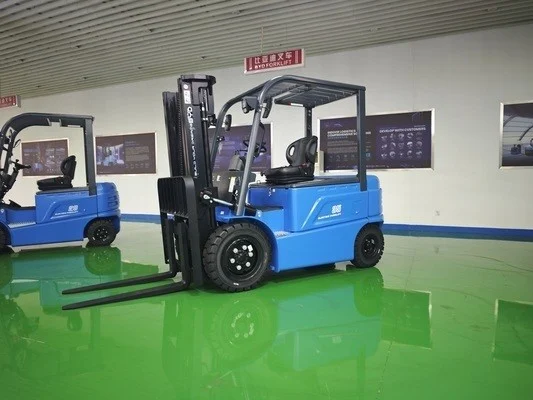
Frequently Asked Questions
Can one tire type handle both indoor and outdoor surfaces?
Often a compromise is possible, but it depends on the route. A truck that spends most of its time on sealed floors with occasional outdoor crossings may suit a firmer, less aggressive tread, while frequent rough-ground travel may call for more shock absorption. The right balance comes from the surface share, transition frequency, and load data, not from a single universal recommendation.
Do solid tires damage warehouse floors?
Not inherently, but marking and wear depend on compound, floor finish, load, and driving style. Smooth or ribbed treads generally leave fewer marks than aggressive lug patterns, yet any tire can scuff a soft coating under sharp turning with a heavy load. Confirm floor compatibility with the tire supplier and test on a small area if the finish is critical.
How do I know the tire is rated for my load?
Check the tire load rating against the actual load at each wheel position, accounting for load center and any attachment. The truck’s nominal capacity alone is not sufficient. Ask the supplier to confirm the rating using your maximum load, lift height, and route conditions.
Should I choose a lithium battery option because of the route?
Battery choice should follow shift length, charging availability, and operational pattern rather than tire selection. A lithium option may suit opportunity charging or multi-shift use, but confirm the available configurations and charging equipment with the supplier. Tire and battery decisions are related only through the duty cycle they both serve.