Comparing Lithium-Ion and Lead-Acid Battery Options When Specifying a Four-Wheel Counterbalance Electric Forklift Truck
News 05/11/2026
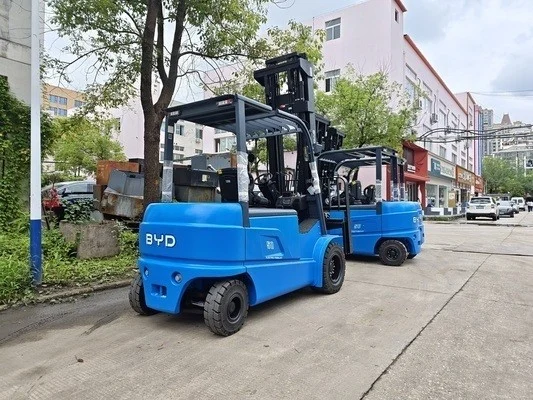
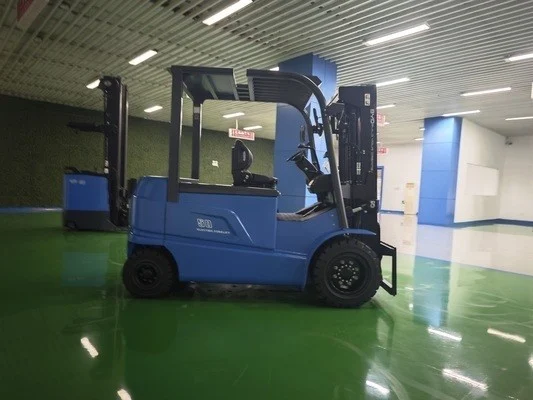
Choosing a battery chemistry is one of the most consequential decisions when you specify an electric forklift truck. A four-wheel counterbalance electric forklift is a general-purpose workhorse in loading docks, warehouses and production halls, and its battery determines how the truck fits your shift pattern, charging infrastructure and floor space. Neither lithium-ion nor lead-acid is universally better. The right answer depends on duty cycle, available charging time, facility layout and how you plan to manage battery replacement over the truck’s service life.
Start With the Duty Cycle, Not the Chemistry
Before comparing chemistries, document how the truck will actually work. These inputs drive every later decision:
- Shift length and intensity: continuous container unloading differs from intermittent pallet moves.
- Loads and lift heights: heavier loads at high lift heights draw more energy.
- Operating environment: ambient temperature, dust, moisture and wash-down practices.
- Charging window: when and where can the truck be parked and plugged in?
- Battery handling space: is there room and equipment to change a battery?
These facts belong in your specification document alongside load capacity, load center, lift height and aisle width. Battery choice should support those requirements, not replace them.
Where Lithium-Ion and Lead-Acid Options Diverge
The table below compares the two chemistries on dimensions that matter during specification. Values are general material characteristics; confirm exact figures with the battery and truck supplier’s technical documentation.
| Dimension | Lithium-ion | Lead-acid |
|---|---|---|
| Charging behavior | Generally suited to opportunity charging during breaks; partial charging is commonly accepted | Typically charged in full cycles; deep discharges and long recharge periods are common practice |
| Battery swapping | Often unnecessary when charging opportunities exist | Frequently used in multi-shift operations to keep trucks running |
| Weight and counterweight | Lighter; truck counterweight and battery compartment must match the approved configuration | Heavier; contributes to counterbalance in many truck designs |
| Maintenance routine | No water topping; battery management system monitors cells | Regular watering, equalizing charges and terminal care required |
| Ventilation and charging area | Charging area requirements depend on the charger and battery documentation | Charging areas typically need ventilation and spill containment planning |
| Temperature sensitivity | Charging and discharging behavior varies with temperature; check the supplier’s operating limits | Capacity and charge acceptance generally decline in cold conditions |
| Upfront cost pattern | Often higher initial cost, offset by lower maintenance and no battery changes in suitable duty cycles | Often lower initial cost, offset by battery handling, watering and replacement cycles |
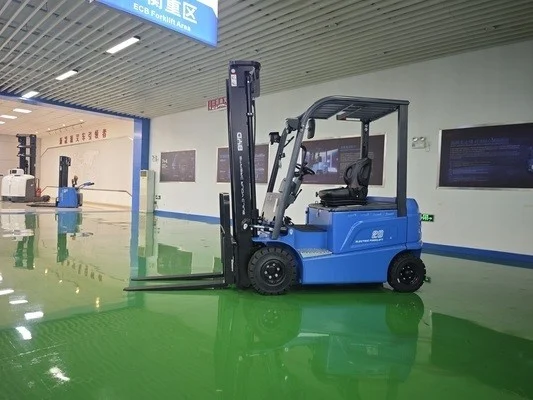
Treat this as a framework, not a scorecard. The weight difference, in particular, is a safety and stability matter: a four-wheel counterbalance electric forklift is approved with a specific battery mass and position. Never substitute a lighter or heavier battery without written confirmation from the truck manufacturer.
Matching Each Option to Real Operating Conditions
Single-shift operations with a fixed charging spot
A lead-acid battery can work well when the truck returns to the same bay each day, has a full overnight charging window and the site can manage watering and ventilation. A lithium-ion battery can also suit this pattern and may reduce maintenance labor, but the higher initial cost needs justification through the maintenance and handling savings you can actually document.
Multi-shift operations without spare trucks
Here the decision often turns on charging logistics. Lead-acid typically relies on battery swapping or dedicated spare batteries to cover a second or third shift. Lithium-ion, with opportunity charging during breaks, can reduce the need to handle batteries, provided the charger capacity and charging windows are correctly sized. Do not assume this works without checking the truck’s energy consumption against the charger output and the actual break schedule.
Cold stores and outdoor docks
Both chemistries are affected by temperature, and the effect differs between charging and discharging. Ask the supplier to state the approved operating temperature range and any derating that applies. A battery that performs acceptably in a heated warehouse may behave differently on a refrigerated dock.
Harsh or wash-down environments
Check enclosure ratings and the supplier’s cleaning instructions. Neither chemistry removes the need to protect connectors, chargers and the battery compartment from water and debris.
Questions to Settle Before You Issue the Specification
Use these checks to close gaps in the specification and avoid costly changes after delivery:
- Confirm the approved battery mass, dimensions and voltage with the truck manufacturer, since these affect stability and the rated capacity stated on the data plate.
- Obtain charger specifications, including input power, output and recommended charging profile.
- Verify the facility’s electrical capacity and the charging area’s ventilation, fire protection and spill provisions.
- Ask what battery management data the supplier provides and how fault warnings appear to the operator.
- Clarify warranty terms covering battery capacity retention, cycle limits and the conditions that void coverage.
- Plan end-of-life handling and replacement cost expectations, since these differ between chemistries.
If you are evaluating a four-wheel counterbalance electric forklift, share your load weights, lift heights, shift pattern, charging windows and floor conditions with the supplier. Those details let the selection and configuration discussion focus on a battery and charger combination that matches your operation rather than a generic recommendation.
Frequently Asked Questions
Can a lithium-ion battery be added to an existing lead-acid truck?
Sometimes, but it is not a simple swap. Battery mass, voltage, charging profile, compartment fit and the truck’s approval all need confirmation from the manufacturer. A lighter battery can change stability, so never proceed without written approval.
Is opportunity charging suitable every day?
It depends on the battery management system, charger and duty cycle. Frequent partial charging is commonly used with lithium-ion in suitable applications, but the supplier should confirm the pattern is acceptable and explain how it affects warranty and long-term capacity.
Which chemistry needs more space?
Lead-acid installations often need room to change batteries plus ventilation and spill containment provisions. Lithium-ion installations may need less battery-handling space but still require an approved charging area. Measure your actual layout rather than assuming.
How should I compare total cost?
Include purchase price, charger cost, electrical work, maintenance labor, watering or battery handling, replacement timing and disposal. Use figures your suppliers provide in writing; avoid generic savings percentages that are not tied to your duty cycle.