Comparing Different Forklifts Type: Four-Wheel Counterbalance Electric Models Rated 2 to 3.5 Tonnes
News 01/11/2026
When buyers compare different forklift types, the four-wheel counterbalance electric model rated 2 to 3.5 tonnes often emerges as a practical choice for heavy-duty indoor and outdoor work. This article compares key configurations within that class—battery type, load center, lift height, and chassis design—so you can match a model to your actual operating conditions. It does not rank models or claim test results; instead, it explains trade-offs and the specifications you should verify with a supplier.
What Defines a Four-Wheel Counterbalance Electric Forklift
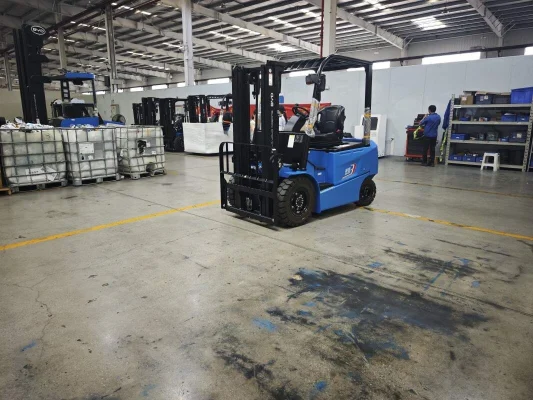
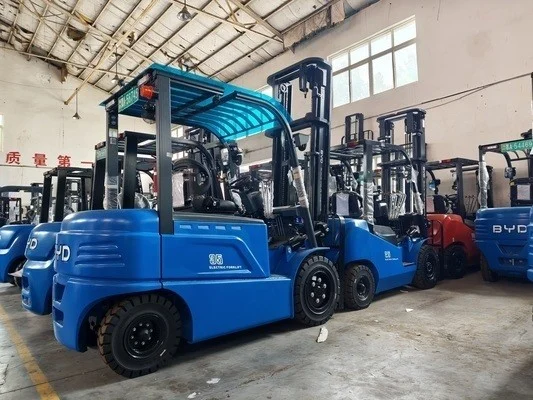
A four-wheel counterbalance electric forklift uses a battery-powered electric motor and a counterweight to lift loads in front of the operator. The four-wheel configuration typically provides stability on uneven surfaces and in outdoor yards, while the counterbalance design allows the forklift to pick up loads from the floor and stack them at height. Models rated 2 to 3.5 tonnes fall into a mid-range capacity band commonly used in manufacturing, warehousing, and logistics.
Within this class, differences appear in battery technology, motor type, hydraulic system, and operator compartment. These differences affect charging time, maintenance needs, and suitability for multi-shift operations. The sections below compare those aspects without assuming one configuration is universally better.
Battery and Charging: Lithium-Ion vs. Lead-Acid
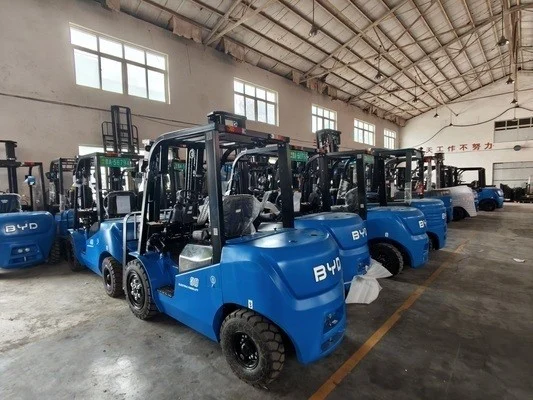
Battery choice is a primary differentiator among electric models. Lead-acid batteries have a long history in forklifts and typically cost less upfront, but they require watering, equalizing charges, and dedicated charging rooms with ventilation. Lithium-ion batteries, such as those used in BYD models, generally allow opportunity charging and may not need watering, but they come with higher initial cost and specific charging infrastructure requirements.
When comparing, consider your shift pattern. A single-shift operation with a central charging station may find lead-acid adequate. Multi-shift operations with limited charging windows may benefit from lithium-ion’s faster charging capability, but you should confirm cycle life and warranty terms with the supplier. No battery type is universally superior; the right choice depends on duty cycle, available charging time, and budget.
Charging Infrastructure and Site Requirements
Lead-acid charging areas need ventilation and spill containment. Lithium-ion charging may require specific voltage and communication protocols. Before selecting, check the available power supply, charging space, and any local regulations governing battery charging. These site conditions often influence the final decision more than battery chemistry alone.
Load Center and Lift Height: Matching the Machine to the Task
Rated capacity is not a fixed number; it depends on load center and lift height. A forklift rated 3 tonnes at a 500 mm load center may have a lower capacity when the load center extends to 600 mm or when lifting to full height. Always compare capacity charts at the actual load center and lift height you need.
For example, handling pallets with a load center of 600 mm reduces capacity compared with a 500 mm load center. Similarly, lifting to 6 meters may require a different mast specification than lifting to 3 meters. When comparing models, request capacity curves and mast specifications from each supplier and verify they meet your heaviest load at your highest lift.
Mast Options and Visibility
Mast type affects visibility and lift height. Two-stage, three-stage, and four-stage masts offer different free-lift and overall height characteristics. A mast with good forward visibility can improve safety in tight aisles, but it may have a lower capacity rating. There is no single best mast; the choice depends on your racking height, aisle width, and load sizes.
Chassis, Wheels, and Operator Ergonomics
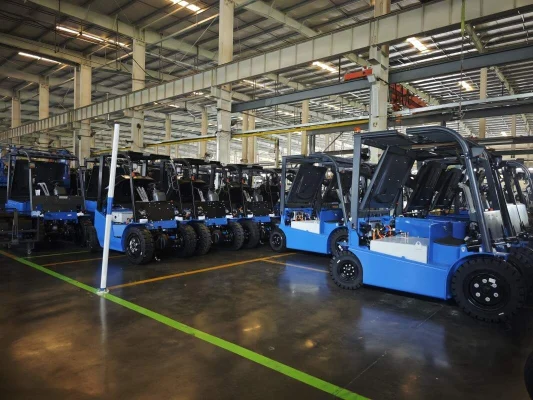
Four-wheel counterbalance models differ in wheelbase, tire type, and operator compartment design. Pneumatic or cushion tires suit different surfaces: pneumatic tires handle rough outdoor yards, while cushion tires work well on smooth indoor floors. The wrong tire choice can affect traction, ride comfort, and floor wear.
Operator ergonomics also vary. Adjustable seats, hydraulic controls, and clear sightlines influence productivity during long shifts. When comparing, sit in the operator compartment and test control reach if possible. These factors are subjective but important for reducing fatigue and improving safety.
Turning Radius and Aisle Width
Four-wheel models generally have a larger turning radius than three-wheel models, which can affect aisle width requirements. Measure your narrowest aisle and compare it with the published turning radius. If aisle space is tight, a different forklift type might be more suitable, but within the four-wheel class, models with a shorter wheelbase may offer better maneuverability.
Site Conditions and Operational Fit
Before choosing among 2 to 3.5 tonne four-wheel electric models, assess your site conditions. Floor strength, gradients, door heights, and outdoor exposure all influence suitability. Four-wheel counterbalance forklifts can handle moderate ramps and uneven surfaces, but you should confirm the maximum gradient and floor load capacity with the supplier.
Work cycle also matters. Frequent lifting to full height with heavy loads may require a higher capacity rating or a different mast. Conversely, light-duty applications may not justify the cost of a larger model. Map out a typical shift: how many lifts, what weights, what heights, and how far the loads travel. This information helps narrow the options.
Safety and Training Considerations
Electric forklifts require operator training specific to battery handling and charging. Ensure your team understands emergency procedures, charging protocols, and daily checks. Safety features such as lights, horns, and speed limits should meet site rules. No model eliminates the need for proper training and maintenance.
Frequently Asked Questions
How do I choose between 2-tonne and 3.5-tonne models?
Start with your heaviest load and its load center. If your heaviest load is 1.8 tonnes at a 500 mm load center, a 2-tonne model may suffice, but check the capacity at your actual lift height. If loads approach 3 tonnes or you use attachments that shift the load center, a 3.5-tonne model may be necessary. Always verify with capacity charts.
Can a four-wheel electric forklift work outdoors?
Yes, many four-wheel counterbalance electric models are designed for outdoor use, especially with pneumatic tires and appropriate IP ratings. However, check the manufacturer’s specifications for dust and water ingress protection, and avoid operation in heavy rain or extreme temperatures unless rated for such conditions.
What maintenance does a lithium-ion battery require?
Lithium-ion batteries generally require less maintenance than lead-acid, as they do not need watering. However, they still require periodic checks of connections, cooling systems, and state of charge. Follow the manufacturer’s maintenance schedule and use compatible chargers to avoid voiding warranties.
How does load center affect capacity?
Capacity decreases as load center increases. A forklift rated 3 tonnes at 500 mm may only handle 2.5 tonnes at 600 mm. Always use the load center specified in your application and consult the capacity chart. Ignoring load center can lead to tipping and unsafe operation.