Integrating BYD electric forklift Into Existing Facility Electrical Infrastructure
News 15/10/2026
Third-party logistics (3PL) warehouses handle variable throughput, multiple daily shifts, and fluctuating fleet sizes, so adding a BYD electric forklift requires aligning the new machine’s power needs with your facility’s existing electrical setup. Integration success depends on matching your facility’s current capacity to the forklift’s power requirements, avoiding unexpected outages or costly unnecessary upgrades.
Core Infrastructure Requirements
Power Load Calculation
3PL warehouses run multiple pieces of electrical equipment alongside charging stations: lighting, conveyor systems, sorting equipment, and other material handling tools. Adding a new charging system can push your facility’s existing panel beyond its rated capacity. This leads to tripped breakers, overheated wiring, and unexpected shutdowns during critical operational windows.
Start by mapping all current connected loads on the electrical panel that will host the forklift charging circuit. Note peak demand times, which fall during inbound receiving and outbound shipping windows in 3PL operations. Compare this total to the panel’s maximum rated capacity, then add the charging system’s rated power draw from BYD’s official technical documentation.
If your panel lacks enough remaining capacity, you have two common options: upgrade the panel or schedule charging during off-peak hours when other high-load equipment sits idle. Off-peak charging works well with 3PL warehouses that shut down major operations overnight, but it does not fit multi-shift 24/7 operations that require constant fleet availability.
Charging Station Placement
3PL warehouses often face space constraints near existing electrical panels. You need balance operator access, clearance around the charging unit for maintenance, and proximity to the main panel to avoid excessive voltage drop over long wiring runs. Voltage drop reduces charging efficiency and can damage charging components over extended use.
Longer wiring runs require thicker gauge wiring to maintain stable voltage. Confirm voltage drop values with your licensed electrician after you mark the intended charging location, based on the charging system’s rated current from BYD specifications. If your ideal charging location sits too far from the main panel, you may need to run a dedicated sub-panel or adjust placement to avoid costly wiring upgrades.
Key Configuration Checks Before Integration
The table below outlines key configuration items specific to 3PL warehouse operations, along with associated risks and required confirmations:
| Parameter/Configuration | 3PL Warehouse Specific Risk | Information To Confirm With Supplier | Availability Status |
|---|---|---|---|
| Charging Power Level | High peak load can trip circuit breakers during busy shifts | Rated power draw per charging unit; low-power charging option availability | Standard high-power, optional low-power with facilities facing limited capacity |
| Opportunity Charging Compatibility | Multi-shift operations need top-ups between load cycles to maintain throughput | BMS support for partial charging without reducing battery service life | Standard on most BYD lithium battery models, confirm on specific chassis |
| Wiring and Connector Compatibility | Mismatched connectors prevent immediate use after installation | Connector type; compatible third-party charging station certifications | Standard connector included with all new BYD units |
| Ground Fault Protection | Warehouse concrete floors often have higher moisture levels that create shock hazards | Included GFCI protection; required additional protection per local electrical codes | Standard per regional safety regulations |
3PL operations often rely on opportunity charging to keep fleet productivity high during peak seasonal periods. While BYD electric forklifts use lithium iron phosphate batteries, which generally handle partial charging well, you still need to confirm your specific model’s BMS settings with your supplier before installation begins.
Step-by-Step Integration Workflow
- Conduct a full facility electrical audit: Document all existing loads, panel capacities, and peak demand times aligned with your 3PL warehouse’s operational schedule.
- Share your audit results with your BYD dealer and licensed electrician. Both parties review the setup to identify potential capacity or placement issues early.
- Obtain official technical specifications for your ordered BYD electric forklift and its matching charging system. Do not rely on generic model specifications, as configurations can vary based on chassis and battery options.
- Complete any required upgrades (panel upgrade, sub-panel installation, new wiring runs) before the forklift arrives at your facility. This avoids delays putting the new machine into active service.
- Test the charging circuit under full load before you connect the forklift. Verify voltage stability, ground fault protection, and breaker function.
- Complete a full test charge cycle with the forklift to confirm all components work as intended, then train operators on proper charging procedures aligned with your facility’s schedule.
Multi-shift 3PL operations can add a load management system that prioritizes charging when excess capacity exists. This prevents unexpected outages during peak operating hours and helps you avoid unnecessary panel upgrades when your facility has just enough extra capacity to support the new charger.
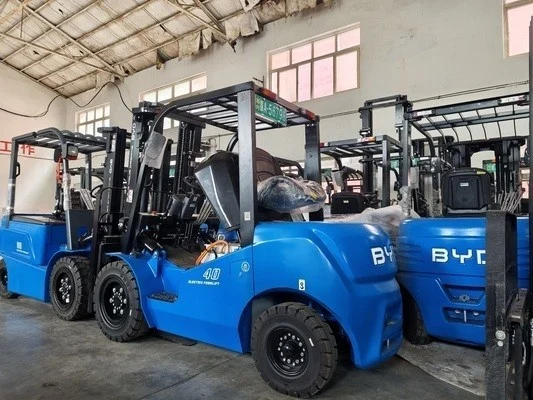
One common mistake facilities make is skipping pre-arrival upgrades, which leads to delays putting the new forklift into service, creating productivity dips during already busy peak periods.
Frequently Asked Questions
Can I connect a BYD electric forklift charger to an existing general purpose circuit?
Most BYD electric forklift charging systems require dedicated, high-capacity circuits. General purpose circuits rarely meet the power draw requirements, and sharing a circuit with other equipment increases risk of tripped breakers or overheating. Always install a dedicated circuit per charging station to ensure safety and reliability.
Do I need to upgrade my entire facility electrical system to add one BYD electric forklift?
No, most 3PL warehouses only need to upgrade the specific panel or add a dedicated sub-panel if the existing panel lacks sufficient remaining capacity. A full facility upgrade is rarely required unless your entire building’s electrical system sits well below current operational needs.
Does opportunity charging damage BYD electric forklift batteries?
BYD uses lithium iron phosphate batteries designed to handle frequent partial charging. But battery management system (BMS) settings can vary between different forklift models. Always confirm your specific model’s charging guidelines with your dealer before you implement an opportunity charging schedule.
What permits do I need before installing a new charging station?
Permit requirements vary based on your local building and electrical codes. Your licensed electrician will typically handle permit applications as part of the installation process. Always secure all required permits before you start any wiring or upgrade work.
Before you finalize your integration plan, compile all relevant data: your facility’s peak electrical demand, your daily shift schedule, your forklift expected usage patterns, and any space constraints you face. Share this information with your dealer and electrician early to avoid last minute issues that delay your project.