LiFePO4 Forklift Battery Weight and Counterweight Trade-Offs: What Four-Wheel Counterbalance Electric Truck Buyers Should Confirm
News 07/11/2026
A LiFePO4 forklift battery changes more than charge time. It also changes how much weight sits low in the truck, and that affects stability, residual capacity and the paperwork you should request before ordering a four-wheel counterbalance electric forklift. The practical answer: confirm the battery’s actual mass, its position inside the compartment, the truck’s rated capacity at your real load center and lift height, and whether the manufacturer’s counterweight configuration was validated with that battery type. Do not assume a lighter lithium pack is a direct swap.
Why battery mass matters on a counterbalance truck
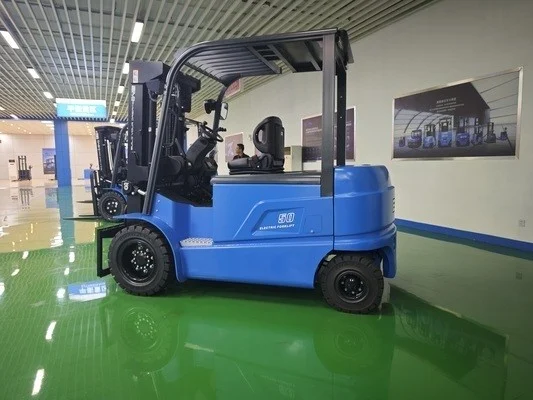
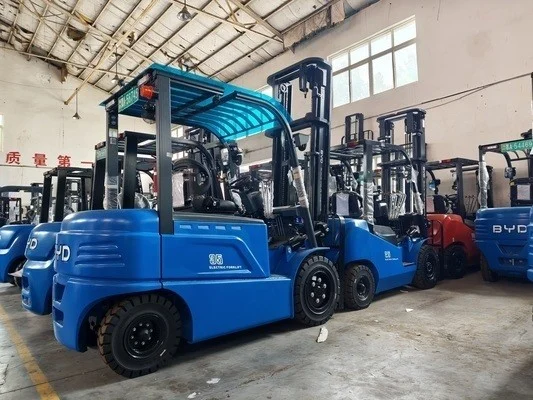
On a four-wheel counterbalance electric forklift, the battery is part of the counterweight system. The chassis and counterweight sit at the rear; the battery occupies a defined cavity, often low and central. Stability calculations assume a specific mass at a specific location.
A LiFePO4 pack generally stores the same energy in less volume and mass than a conventional lead-acid battery of similar nominal capacity. That is a general material characteristic, not a guarantee about any specific product. The consequence is straightforward: if the replacement pack is lighter, the truck may have less counterbalance than the original configuration assumed. Residual capacity can fall, and the allowable load center or lift height may need to be reduced.
Some suppliers address this by adding ballast or by specifying a heavier enclosure. Others design the truck around a lithium pack from the start. Which approach applies is a question to put to the supplier, not something to infer from a brochure photo.
What to confirm about the battery itself
Before discussing counterweight, get the battery facts in writing. Ask the supplier to confirm:
- Nominal voltage and rated capacity (Ah and kWh), plus the test conditions behind those figures.
- Actual pack mass, including enclosure, connectors and any ballast, stated as a single number.
- Physical dimensions and the footprint that must sit on the compartment floor.
- Center of gravity location or mounting height restrictions.
- Charging voltage, current limits and the charger specification the pack requires.
- Operating temperature range and any derating that applies outside it.
- Whether the pack is approved by the truck manufacturer for that model.
These are procurement parameters, not marketing claims. If a data sheet omits mass or gives a range, ask for the exact configuration you would receive.
Counterweight and capacity questions to settle before quoting
The truck’s data plate is the starting point, but it reflects the configuration the manufacturer tested. A different battery mass can invalidate the numbers on that plate. Use a short checklist when you request a quotation:
- Rated capacity and load center. State the load weight and the horizontal distance from the fork face to the load center you actually handle.
- Lift height. Capacity falls as the carriage rises; give the maximum height you need, not an average.
- Attachment. Side shifters, clamps or other attachments move the load forward and change capacity. Disclose them.
- Battery mass and position. Ask whether the quoted truck’s counterweight is calibrated to the quoted LiFePO4 pack.
- Floor and aisle conditions. Surface type, slope and aisle width affect whether the truck fits the job at all.
- Shift pattern and charging. Confirm how many hours the truck runs between charges and whether opportunity charging is planned.
A hypothetical scenario: a buyer replaces a lead-acid pack with a lighter LiFePO4 unit on an older truck and keeps the original data plate rating. If the load is near the rated limit at full lift, the margin may no longer exist. The correct response is to ask the truck manufacturer to re-rate the configuration, not to rely on the old plate.
Verification, documentation and acceptance points
Ask what documentation accompanies the truck and battery. Reasonable requests include the battery data sheet, the charger specification, the truck data plate showing the configuration as built, and written confirmation that the battery is approved for that model. If the supplier adds ballast, ask where it sits and how it is secured.
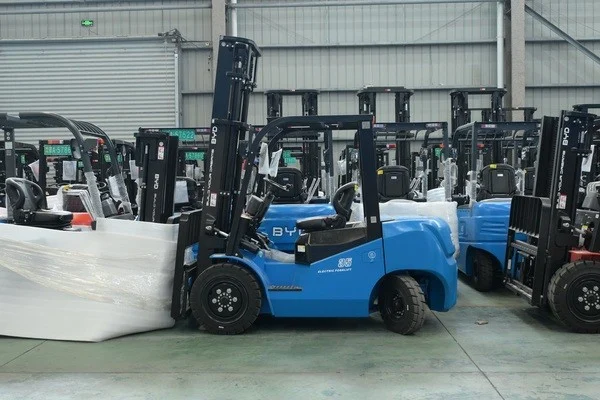
At acceptance, check that the delivered battery mass and dimensions match the quotation, that the data plate reflects the delivered configuration, and that the charger matches the pack. Confirm the capacity rating applies at your stated load center and lift height. Test the truck with a representative load in your own aisle before signing off.
Where information is missing, say so plainly in the purchase order: unresolved items should be listed as conditions, not assumed. This site supplies four-wheel counterbalance electric forklifts with lithium battery options; share your load weight, load center, lift height, aisle width, floor and slope conditions, shift pattern and charging arrangements, and the team can confirm which configurations fit and which parameters still need verification.
Frequently asked questions
Does a lighter LiFePO4 battery always reduce lifting capacity?
Not automatically. It depends on the truck design, the battery’s position and whether the manufacturer compensates with ballast or a re-rated configuration. The safe step is to ask the truck manufacturer to confirm capacity at your load center and lift height with the exact battery specified.
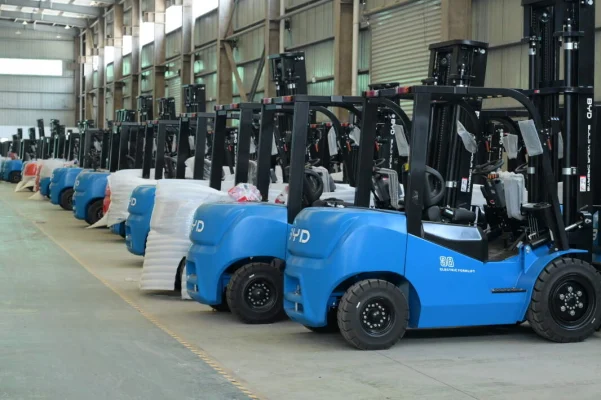
Can I swap a lead-acid battery LiFePO4 without changing the counterweight?
Only if the truck manufacturer confirms the configuration. A swap changes mass and possibly the center of gravity, so the original data plate may no longer describe the truck accurately. Get written approval before operating near rated capacity.
Which numbers should I give a supplier when requesting a quote?
Load weight, load center distance, maximum lift height, any attachment, aisle width, floor type and slope, hours per shift, and your charging arrangements. These determine whether a four-wheel counterbalance electric forklift suits the job and how it should be configured.
What if the supplier cannot provide the battery mass?
Treat that as an open item. Without the pack mass and mounting position, counterweight and capacity cannot be checked. Request the exact figure in writing or choose a supplier who can provide it.