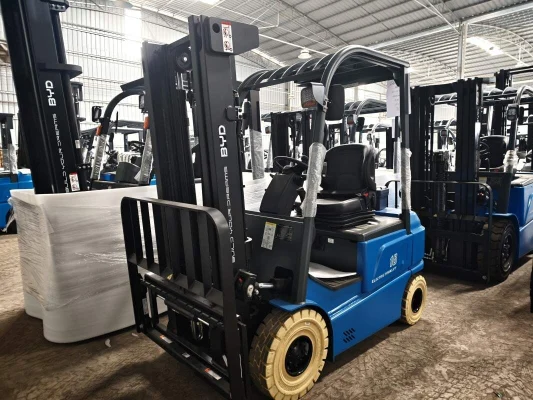
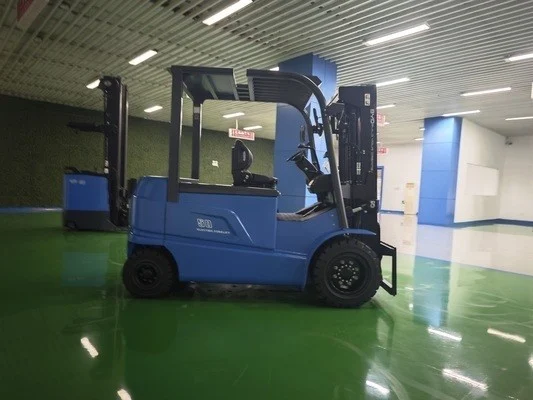
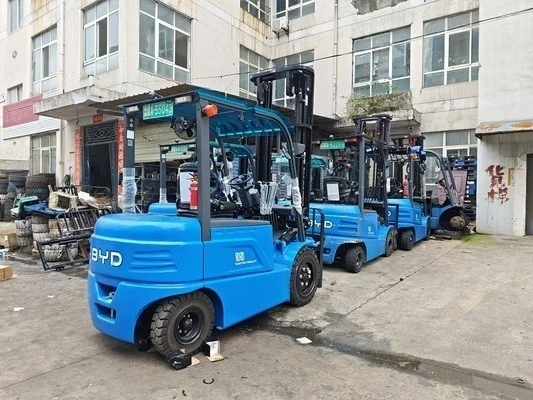
What to Confirm About Battery Voltage, Charger Siting, and Opportunity Charging Before Ordering a Lithium Forklift 3 Ton
News 05/11/2026
A lithium forklift 3 ton order can be held up by three details that are easy to leave until the last minute: the battery voltage and pack configuration, where the charger will physically sit, and whether the operation intends to charge in short bursts during shifts. These are not sales formalities. They determine the truck configuration, the electrical work at your site, and the daily routine your operators will follow. This article explains what to confirm, what documents to request, and which answers must come from the manufacturer’s technical data rather than from assumptions.
Battery Voltage and Pack Details to Lock Down Before Signing
Voltage is the first number most buyers ask about, but it is only one part of the specification. A 3 ton four-wheel counterbalance electric forklift is typically offered in more than one voltage class, and the correct choice depends on the manufacturer’s design rather than on a general rule you can apply across brands. Confirm the following items in writing.
Nominal voltage and how it is described
Ask the supplier to state the nominal voltage of the battery pack and the voltage range the truck’s controller and motors accept. Do not accept a single figure without the surrounding context. A pack that is described only by its nominal voltage tells you little about usable capacity, charging behavior, or compatibility with the charger you plan to install.
Capacity, chemistry, and cell configuration
Request the rated capacity in ampere-hours or kilowatt-hours, the cell chemistry, and the number of cells or modules. These figures should come from the manufacturer’s technical datasheet. If the supplier cannot provide them, treat the specification as unconfirmed and ask again before committing. Capacity figures also need a stated test condition, because a number without a reference condition cannot be compared meaningfully with another offer.
Battery management and communication
Lithium packs normally include a battery management system that monitors cell voltage and temperature and communicates with the charger and, on some designs, with the truck. Ask whether the battery management system is integrated into the pack, what it controls, and whether the charger must be matched to it. A charger that cannot communicate with the pack may be limited to a conservative charging profile or may not be approved at all. Get the supplier’s written confirmation that the charger and battery are a matched pair.
Physical fit and exchange method
Confirm the pack’s dimensions, weight, and how it is removed or exchanged, if at all. On a four-wheel counterbalance truck, the battery compartment and counterweight arrangement affect both stability and service access. If you plan to swap packs between shifts, ask whether the design supports that and what equipment is required. If you plan to charge in place, confirm that the compartment allows the ventilation and access the charger instructions require.
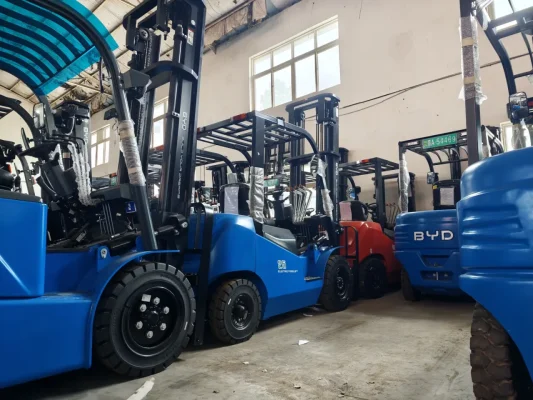
Charger Siting: Electrical, Ventilation, and Access Checks
Charger location is a site decision, not a truck option, and it is often the item that delays commissioning. The charger manual and your local electrical code govern the final layout; the points below are the questions to raise early with your facilities team.
Power supply and protection
Confirm the input voltage, phase, and current the charger requires, then compare that with the supply available at the intended location. Ask whether the charger needs a dedicated circuit, what upstream protection the manufacturer specifies, and whether your electrical contractor needs to install a disconnect or outlet of a particular type. Do not assume an existing industrial outlet is suitable; verify the rating and condition.
Ventilation and thermal conditions
Chargers generate heat, and some battery designs have temperature limits during charging. Ask the supplier what ambient temperature range the charger and pack are rated for, and whether the chosen location meets it. Avoid placing the charger where heat accumulates or where airflow is blocked by stored goods. Where the manufacturer’s instructions call for ventilation, treat that as a requirement rather than a suggestion.
Access, cable routing, and traffic
Measure the distance from the charger to where trucks will park. A cable that is too short forces awkward positioning, and a cable that crosses a walkway creates a trip and damage hazard. Consider whether the parking position blocks aisles, fire equipment, or loading doors. Also confirm that operators can reach the charger controls and see the charging status without entering a traffic lane.
Protection from impact and the environment
Forklift charging areas see vehicle movement, so the charger and its cables need protection from contact. Ask whether the charger enclosure is suitable for the location, and plan physical protection such as bollards or a dedicated bay where the layout allows. If the area is damp, dusty, or exposed to washdown, confirm the enclosure rating with the supplier rather than inferring it.
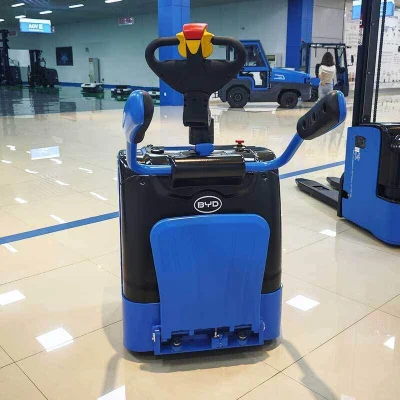
Opportunity Charging: Whether Your Shift Pattern Supports It
Opportunity charging means connecting the truck to the charger during breaks, shift changes, or other idle periods instead of waiting until the battery is depleted. It can reduce the need to hold a spare pack, but it only works when the battery, charger, and work pattern are compatible. The points below help you decide whether to plan around it.
What the battery and charger allow
Ask the supplier directly whether the specified pack and charger are intended to accept partial charging throughout the day, and whether any conditions apply. Do not generalize from lithium chemistry alone; the acceptable charging behavior is a property of the specific pack design and its management system. Request the manufacturer’s guidance in writing, including any limits on charge frequency or state of charge.
How the work pattern fits
Map the actual shift: how long the truck runs, when breaks occur, and how far the parking position is from the charger. Opportunity charging depends on enough idle time near the charger, not just on the existence of breaks. If trucks work continuously with no realistic window to plug in, a different charging plan may be more suitable. A simple table can help compare options.
| Charging approach | What it requires | Main limitation to check |
|---|---|---|
| Charge in place between shifts | Charger near the parking bay; adequate charging window | Whether the window is long enough given the pack and charger ratings |
| Opportunity charging during breaks | Supplier confirmation that partial charging is acceptable; short, frequent connections | Whether the work pattern provides realistic idle time near the charger |
| Battery exchange | Exchange method supported by the truck design; handling equipment | Space, equipment, and trained staff |
Habits that undermine the plan
Common mistakes include installing one charger at a location convenient to the electrical room rather than to the trucks, leaving cables across walkways, and assuming partial charging is approved without asking. Another frequent error is ordering a pack and charger from different sources without confirming compatibility. Each of these is avoidable with a short written checklist agreed before the order is placed.
What to send the supplier
To get a configuration that fits your site, provide the actual duty cycle, the maximum load and lift height you need, aisle and ground conditions, shift pattern, and the electrical supply available at the intended charger location. Ask the supplier to confirm the voltage, pack capacity, charger model, and charging guidance against those inputs. Where the supplier cannot confirm a point from technical data, note it as open rather than filling the gap with an assumption.
Frequently Asked Questions
Can I use an existing charger with a new lithium pack?
Only if the charger manufacturer and the battery supplier both confirm compatibility, including the charging profile and any communication requirements. A charger built for another battery type may not be approved, and using it could affect the warranty or safe operation. Obtain written confirmation rather than relying on connector fit alone.
Does opportunity charging shorten battery life?
That depends on the specific pack design and how it is managed. Some lithium packs are intended to accept partial charging, while others have conditions attached. The reliable answer comes from the manufacturer’s technical guidance for the exact model you are ordering, not from a general statement about lithium batteries.
What information do I need before requesting a quotation?
Provide the load weight and load center, required lift height, aisle width, floor and ramp conditions, shift length and pattern, and the electrical supply at the planned charger location. These inputs let the supplier confirm the truck configuration and charger selection instead of guessing.
Where should the charger be installed?
Close enough to the parking position to avoid long or obstructed cable runs, on a supply that meets the charger’s requirements, in an area with acceptable ambient conditions, and protected from vehicle impact. Your electrical contractor and the charger instructions should govern the final installation details.