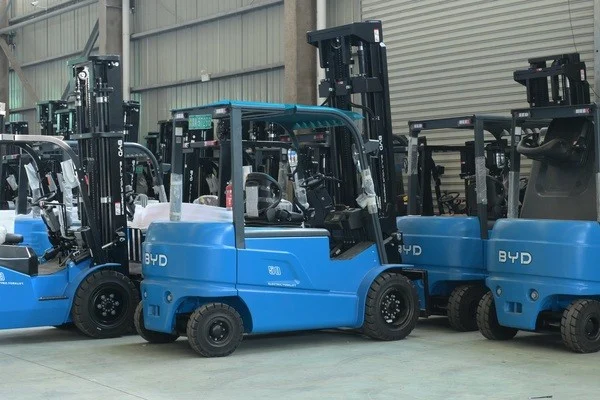
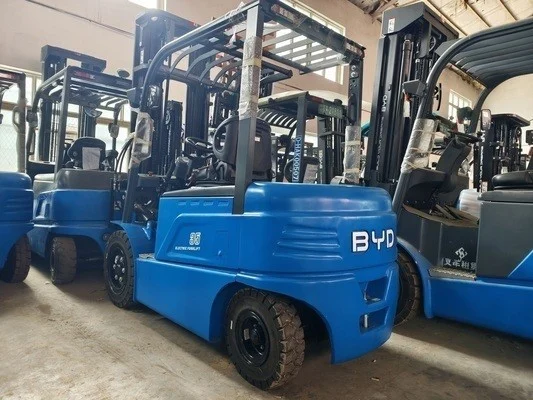
Reliable Industrial Electric Forklifts Available Matching Operation Capacity and Site Access Specifications
News 05/10/2026
Industrial operations across warehousing, manufacturing, and distribution depend on material handling equipment aligned with specific facility needs. Electric forklifts grow in popularity across many sectors due to lower emissions, reduced noise output, and lower long-term operating costs compared to internal combustion models. However, not all electric forklifts work equally well across every operation. This comparison breaks down common models, outlines key selection criteria based on capacity and site access, and helps buyers identify reliable options matching their unique requirements.
Core Forklift Categories Compared By Capacity And Access Needs
Different electric forklift designs serve distinct use cases, with clear differences in maximum load capacity and ability to navigate limited space. Below is a side-by-side comparison of the most common industrial options.
Three-Wheel Electric Counterbalance Forklifts
These units feature a three-wheel design that delivers a much tighter turning radius compared to traditional four-wheel models. Typical maximum load capacity ranges from 1 ton to 3.5 tons, making them suitable for many light to medium duty applications. Their compact size allows operation within aisles as narrow as 2.1 meters, and they fit through standard industrial doorways easily. They work well in indoor environments, and handle light outdoor use on paved surfaces. The main limitation involves lower maximum capacity and reduced stability on uneven unpaved ground compared to four-wheel models.
Four-Wheel Electric Counterbalance Forklifts
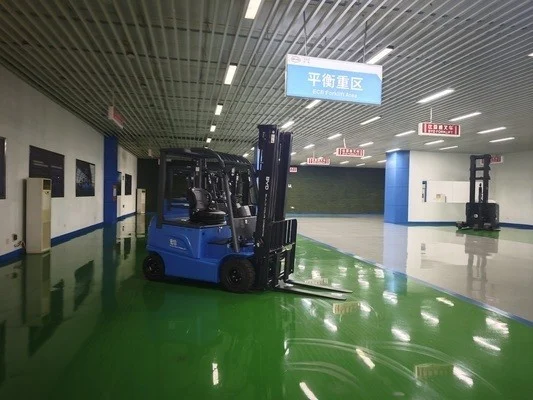
These rugged units offer higher maximum load capacity, with most models supporting up to 8 tons. This makes them ideal for handling heavy items such as steel coils, lumber, or large manufacturing components. They deliver greater overall stability, and handle light outdoor use on paved yards better than three-wheel alternatives. Their wider frame requires more space to turn, so they need aisles of at least 3.5 meters to operate safely. They require larger battery packs, so facilities need dedicated space for charging infrastructure. They remain one of the most popular choices for medium to heavy duty industrial operations that need electric power.
Reach Trucks
Reach trucks are purpose-built to operate within high-bay storage facilities with extremely narrow aisles. Most models can operate within aisles as narrow as 1.6 meters, and lift loads up to 12 meters high to access top-level racking. Typical capacity ranges from 1 ton to 2.5 tons, which fits most standard palleted storage loads. These units are designed exclusively for indoor use on flat finished floors, and are not suitable for long-distance travel or uneven terrain. They remain the top choice for high-density storage warehouses looking to maximize vertical storage space.
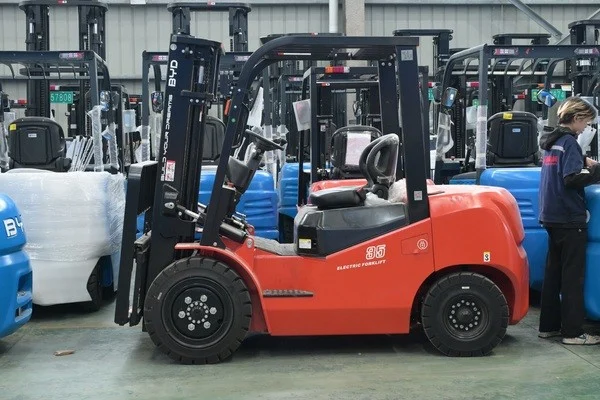
Electric Pallet Jacks
Electric pallet jacks (also called walkie or rider pallet trucks) are low-profile units built to move pallets across short distances. Their typical capacity ranges from 1.5 tons to 3 tons, and their low profile allows them to fit into trailers and through standard doorways easily. They only lift loads a short distance off the ground, so they work well for loading, unloading, and moving pallets between dock and storage area. They cannot lift loads to high racking elevation, so they supplement other forklift types in most large facilities, and work as a standalone solution for small retail backrooms or distribution hubs.
Key Selection Criteria Aligned With Your Facility Requirements
Once you understand the core model categories, use these practical criteria to narrow options matching your specific needs.
Match Rated Capacity To Your Heaviest Regular Load
Always base your selection on the maximum load you handle regularly, not just your average load. Add a 10% buffer to your maximum measured load to avoid overloading the unit. Overloading reduces battery life, increases wear on hydraulic and brake components, and creates significant safety risks. One example: if your heaviest regular load weighs 2 tons, select a model with a minimum rated capacity of 2.2 tons to ensure reliable long-term operation.
Measure All Site Access Dimensions Before Final Selection
Take physical measurements of all spaces your forklift must navigate, including aisle width, doorway clearance, ceiling height, and ramp gradient. For high-bay storage, confirm the maximum lifting height of the model matches your tallest racking. If your operation requires travel across any unpaved ground, most standard electric forklifts will not work. You will need a specialized rugged electric model built to withstand uneven terrain.
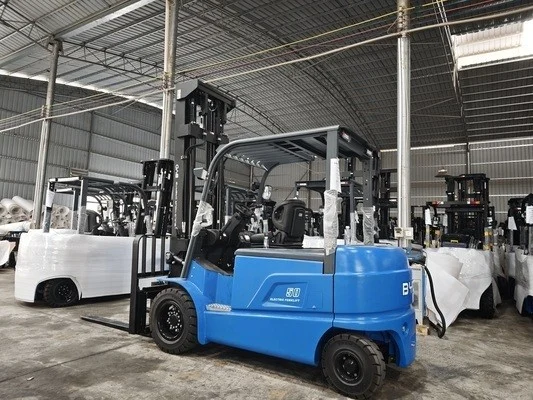
Evaluate Runtime Needs And Existing Charging Infrastructure
Different battery technologies offer different runtime and charging characteristics. Lead-acid batteries require 8 hours charging and 8 hours cooling between uses, so they work best for single-shift operations. Lithium-ion batteries support opportunity charging during breaks, so they work well for multi-shift operations, but carry a higher upfront cost. Confirm your facility has sufficient electrical service and available space to accommodate the charging setup your selected model requires.
Common Application Scenarios And Recommended Model Matches
These common real-world scenarios help illustrate which model fits different operation profiles:
- Small indoor warehouse with 2-meter aisles, maximum regular load 1.8 tons: Three-wheel electric counterbalance forklift matches both access and capacity needs.
- High-density storage facility with 1.6-meter aisles and 10-meter maximum rack height: Reach truck delivers the maneuverability and lifting height required.
- Manufacturing facility with maximum 5-ton steel loads and access to a paved outdoor storage yard: Four-wheel electric counterbalance forklift delivers enough capacity and stability.
- Retail backroom with regular loading and unloading of pallets through standard doorways: Electric rider pallet jack delivers low-cost, maneuverable operation that fits space constraints.
Frequently Asked Questions
What safety certifications should you check before purchasing an electric forklift?
Most regions require electric forklifts meet OSHA (United States) or CE (European Union) safety standards, covering load stability, brake performance, and emergency stop functions. Always verify official certification documents from the seller before completing purchase.
Can electric forklifts operate within cold storage facilities?
Many manufacturers offer specialized cold-storage configured electric forklifts, with battery and lubricant systems built to withstand sub-zero temperatures. Standard electric models can suffer reduced battery life and premature component failure in constant cold environments, so always confirm configuration matches your operating environment.
What is the typical lifespan of an industrial electric forklift?
Lifespan depends on usage frequency, maintenance routine, and load intensity. Well-maintained electric forklifts often last 10 to 15 years, with battery replacement required every 3 to 5 years depending on battery type and usage.
Are used electric forklifts a viable option smaller operations?
Used electric forklifts offer lower upfront cost, but you should always request a full inspection of the battery, hydraulic system, and brakes before completing purchase. Ensure replacement parts remain readily available for the model you select to avoid extended downtime.
Final Considerations
Selecting a reliable industrial electric forklift starts with clear documentation of your operation capacity and site access specs. Taking time to measure your facility, assess your maximum load needs, and evaluate your existing infrastructure helps you avoid costly mismatches that reduce productivity and increase long-term costs. Always test operate a model within your facility (when possible) to confirm it navigates all key spaces before finalizing your purchase.