Site Survey Data to Collect Before Specifying a 2.5 Ton Electric Forklift: Floor Conditions, Aisle Geometry, and Power Availability
News 09/11/2026
A 2.5 ton electric forklift is a substantial investment, and the quality of your site survey directly determines whether the delivered unit fits the building, handles the loads, and keeps up with the shift. Before you compare models or request a quotation, collect measurable data on three areas: floor conditions, aisle geometry, and power availability. This guide explains what to record, how to record it, and which findings typically change the specification. The discussion assumes a four-wheel counterbalance electric forklift, the configuration we supply, and notes where a different truck type may be the honest answer.
Start With the Load Itself
Floor, aisle, and power data only make sense once the load is defined. Record the maximum weight to be lifted, the load center (the horizontal distance from the fork face to the load’s center of gravity), and the maximum lift height. A nominal 2.5 ton rating applies at a stated load center and mast configuration; attachments and taller masts reduce the remaining capacity. Ask the supplier to confirm the derated capacity at your actual load center and lift height rather than assuming the headline figure applies.
Also note pallet or container type, load stability, and whether loads are single or stacked. These details feed directly into mast choice, fork length, and the aisle dimensions covered below.
Floor Conditions: What to Measure and Why
Floors affect traction, tire choice, braking, and long-term truck wear. A four-wheel counterbalance truck carries most of its weight on the drive axle when loaded, so surface quality matters more than it does on lighter equipment.
Surface type and condition
Identify the surface: sealed concrete, worn concrete, asphalt, epoxy coating, steel plate, or expansion joints. Note cracks, potholes, drains, and transitions between indoor and outdoor areas. Photograph problem zones and mark them on a plan.
Flatness and slope
Record gradients on ramps, dock approaches, and yard crossings. Measure the percentage slope over the ramp length and note whether the truck will travel loaded, unloaded, or both. Slope limits and permissible grades must come from the manufacturer’s technical documentation; do not assume a value. If the site has steep ramps, confirm with the supplier whether the configuration suits them.
Floor loading and joints
Check the building’s structural floor loading limits, particularly in mezzanine or upper-level areas. Note the width of expansion joints and whether they cross main travel paths. Very rough or jointed surfaces may call for different tire compounds, which the supplier should confirm against the intended route.
Cleanliness and environment
Dust, moisture, washdown, food residue, or corrosive spillage influence tire type, sealing, and maintenance intervals. Record whether the floor is normally dry, damp, or wet, and whether cleaning involves water hoses or chemicals.
Aisle Geometry: The Numbers That Decide the Truck
Aisle width, rack layout, and turning space determine whether a four-wheel counterbalance truck can work efficiently, or whether the site genuinely needs a different truck type. Measure rather than estimate.
What to measure
- Clear aisle width between rack uprights or stored loads at the narrowest point.
- Right-angle stacking aisle at intersections and at rack ends.
- Doorway, gate, and lift-opening clear widths and heights.
- Overhead obstructions: sprinklers, lights, ducting, and door tracks.
- Available turning area at aisle ends and in staging zones.
Note the measurement method and the conditions at the time: a clear aisle measured with empty racks is not the same as an aisle with overhanging pallets. Record the worst realistic case.
Matching geometry to the truck
Ask the supplier to provide the truck’s dimensions, including overall width, length to fork face, turning radius, and mast height with the mast lowered and raised. Compare these against the measured clearances with a safety margin agreed with your operations team. Where aisles are tight, discuss whether a four-wheel counterbalance truck remains practical, or whether the site layout should change. If the aisle or lift height clearly falls outside what a counterbalance truck can serve, say so honestly rather than forcing the recommendation.
Power Availability and Charging Arrangements
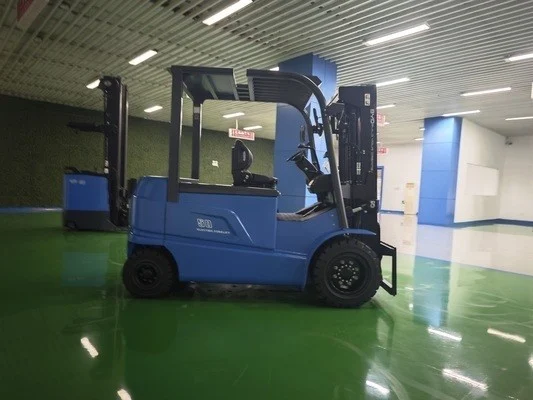
Electric trucks depend on a workable charging plan. Lithium-ion batteries, which our four-wheel counterbalance models use, generally allow opportunity charging during breaks, but the actual charging profile, charger rating, and temperature limits must come from the manufacturer’s documentation.
Electrical supply
Record the available voltage, phase, and current at the proposed charging location, and whether the supply is dedicated or shared. Note the distance from the distribution board and whether an electrician will need to add capacity. Confirm the charger input requirements with the supplier before committing to a location.
Charging space and routine
Measure the space available at the charging point, including clearance around the truck and ventilation. Describe the shift pattern: single shift, double shift, or continuous operation, and when trucks can be charged. This information determines whether one charger per truck is needed or whether a shared arrangement is realistic.
Temperature and environment
Record the ambient temperature range at the charging area and in the working environment. Battery operating, storage, and charging temperature limits must be confirmed against the supplier’s technical data; do not assume a figure. If the site includes cold storage or outdoor work, raise this early so the supplier can advise on configuration.
Turning Survey Data Into a Specification
The table below summarizes the key data points, the risk each addresses, and what to request from the supplier. Treat the final column as items to confirm, not as standard features.
| Data point | Why it matters | Confirm with supplier |
|---|---|---|
| Max load weight, load center, lift height | Determines real capacity, not headline rating | Derated capacity at your load center and mast |
| Floor surface, slope, joints | Traction, braking, tire wear | Tire options and permissible slope |
| Clear aisle and stacking aisle widths | Manoeuvrability and throughput | Truck dimensions and turning radius |
| Door and overhead clearances | Access and mast clearance | Mast height lowered and raised |
| Electrical supply at charging point | Charging feasibility | Charger input requirements |
| Shift pattern and charging windows | Uptime planning | Charging profile and battery guidance |
| Ambient temperature range | Battery and hydraulic performance | Operating and charging temperature limits |
Use the survey to narrow the configuration: mast type and height, fork length, tire type, and charging arrangement. Where data is missing, mark it as an open item rather than filling the gap with an assumption. A short conversation with our team about your measured aisle widths, loads, and charging supply is usually the fastest way to confirm which four-wheel counterbalance electric forklift configuration suits the site.
Frequently Asked Questions
How precise do aisle measurements need to be?
Measure the narrowest realistic clear width, including overhanging loads and any fixed obstructions, and record how you measured. Small errors matter at tight margins, so use a tape or laser measure and note the worst case rather than an average.
Can a 2.5 ton rating be used at any lift height?
No. Rated capacity applies at a specified load center and mast configuration. Taller masts and attachments reduce remaining capacity, so ask the supplier to confirm the derated figure at your actual lift height and load center.
What if the aisles are too narrow for a counterbalance truck?
That is a layout or truck-type question, and the honest answer may be that a four-wheel counterbalance truck is not the best fit. Discuss the measured clearances with the supplier before assuming a larger or different machine will solve the problem.
Which charging data should be collected first?
Start with the available voltage, phase, and current at the proposed charging point, then record the shift pattern and when charging can occur. Confirm charger requirements and temperature limits against the manufacturer’s documentation.