What Site Survey Data Should Buyers Collect Before Ordering a 2 Ton Electric Forklift
News 13/11/2026
Before you request a quotation on a 2 ton electric forklift, the most useful thing you can do is measure your operation. Suppliers can only match a truck to your site when they know the loads, the lift heights, the aisle geometry, the floor, the duty cycle and the charging arrangement. A short, well-organized site survey turns a vague enquiry into a specification that can be quoted, compared and later accepted on delivery. This guide lists the data worth collecting, why each item changes the configuration, and how to record it so a supplier can respond with a realistic proposal.
Load Data: What the Truck Must Actually Carry
Rated capacity is a starting point, not the whole answer. A 2 ton rating applies under stated conditions, usually a defined load center and lift height. Collect the real weights and shapes you handle.
- Unit load weight: weigh representative loads rather than estimating. Record the heaviest normal load and any occasional peak load.
- Load dimensions and center of gravity: note pallet or stillage footprint, overall height and how far the center of gravity sits from the fork face.
- Attachment use: if you plan to add a clamp, rotator or other attachment, record it, because attachments shift capacity and load center.
- Load stability: note whether loads are rigid, bagged, stacked loose or otherwise prone to shifting.
Load center matters as much as weight. A load whose center of gravity sits further out than the rated load center reduces the safe capacity, so give the supplier the actual figure rather than only the total weight. Ask the supplier to confirm the capacity rating at your real load center and lift height, based on the manufacturer’s technical data.
Lift Height, Mast and Overhead Clearance
Vertical measurements decide the mast type, the free lift and whether the truck fits under doorways, rack beams and ceiling services.
- Maximum lift height: the highest shelf, rack level or stack you must reach.
- Lowered fork height and pallet entry: the height at which forks must slide into the pallet.
- Overhead obstructions: door headers, sprinkler pipes, lighting, cable trays and mezzanine edges, with clearance figures.
- Free lift requirement: whether you need to raise the forks before entering a low-clearance area such as a container or trailer.
Record these as measured heights, not guesses. A mast that is tall enough to reach the top rack but too tall to pass a doorway is a common and avoidable mismatch.
Site Geometry, Floor and Environment
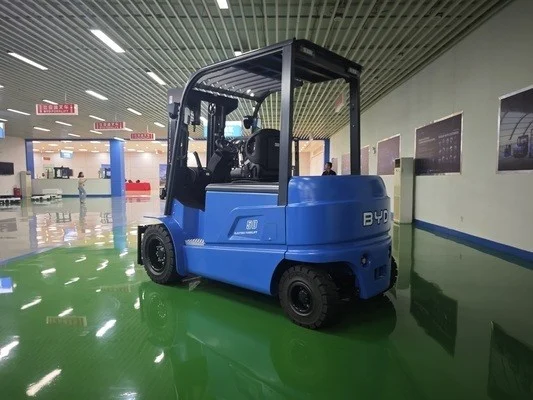
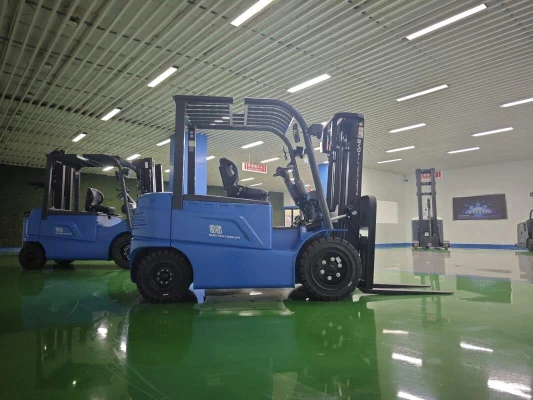
The building and the ground determine how the four-wheel counterbalance electric forklift can move and turn. Measure the tightest points rather than describing them as “narrow”.
- Aisle width: the narrowest travel and stacking aisles, measured between rack uprights or wall faces.
- Turning and door widths: the tightest openings the truck must pass through.
- Floor condition: surface type, joints, potholes, drains, ramps and any slope, with gradient if present.
- Indoor or outdoor use: whether the truck works inside, outside, or crosses between the two, and in what weather.
- Environment: dust, moisture, washdown, cold-store temperatures or other conditions that affect configuration.
Floor and slope data affect both safety and specification. A supplier needs to know whether the truck will operate on level concrete or encounter ramps, because gradeability and braking must suit the site.
Duty Cycle, Shifts and Charging Arrangement
How hard the truck works across a shift shapes battery and charging decisions. Collect operating data over a representative period.
- Shift pattern: hours per shift, shifts per day and days per week.
- Utilization: how much of the shift the truck is actually moving, lifting or idling.
- Travel distances: typical and maximum trip lengths between pick-up and drop-off points.
- Charging location: where a charger can be installed, available power supply and ventilation.
- Charging window: when the truck can be parked long enough to charge, including breaks and between shifts.
For lithium battery models, charging opportunity and available power still need confirmation with the supplier. Do not assume a particular run time or charge time; ask what the manufacturer’s data states under your duty cycle, and note the conditions attached to those figures.
Record, Verify and Ask Before You Order
Put the survey into a simple document with measured values, photos and a site plan marked with aisles, doors, racks and the proposed charging point. Then use it to build your enquiry.
| Data item | What to record | Why it matters |
|---|---|---|
| Loads | Weight, dimensions, load center, attachment | Confirms capacity at your real conditions |
| Lift | Maximum height, lowered height, overhead clearance | Sets mast type and free lift |
| Geometry | Aisle, door and turning widths | Checks maneuverability on site |
| Floor | Surface, slopes, indoor/outdoor use | Affects tires, braking and suitability |
| Duty | Shifts, hours, charging window | Guides battery and charging choice |
When you contact a supplier, state that you are looking at a four-wheel counterbalance electric forklift and share the survey. Ask which configuration they propose, which figures come from the manufacturer’s technical data, and which assumptions they made. Confirm the capacity at your load center and lift height, the aisle width the truck needs, the charging arrangement, and the delivery and acceptance checks. If any measured value is uncertain, say so and agree how it will be verified before the order is placed. This keeps the quotation comparable and reduces the risk of a truck that fits the paperwork but not the building.
Frequently Asked Questions
Is a 2 ton rating enough if my heaviest load is under 2 tons?
Not automatically. The rating applies at a stated load center and lift height. If your load center is further out, or you add an attachment, the safe capacity can be lower. Give the supplier your actual load center and maximum lift height and ask them to confirm the rating at those conditions.
How precise do aisle measurements need to be?
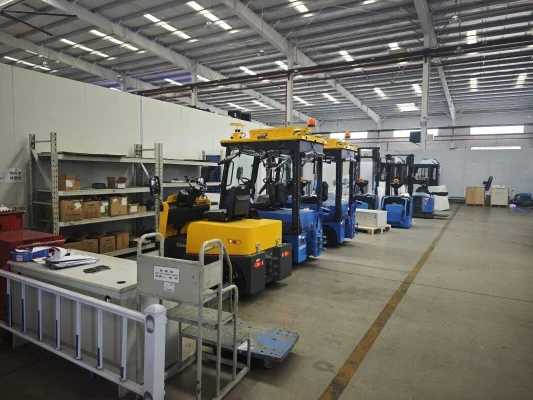
Measure the narrowest point at floor level and at rack-beam height, and note any projections. Approximate descriptions such as “tight aisle” do not let a supplier check the truck’s turning envelope. Record the figures and mark them on a plan.
What charging information should I provide?
State where the charger can go, the available power supply, ventilation, and the longest period the truck can be parked during and between shifts. The supplier can then discuss charging options against the manufacturer’s data rather than a general assumption.
Do I need to survey outdoor areas too?
Yes, if the truck will travel outside. Record surface type, slopes, weather exposure and any transitions between indoor and outdoor floors, since these affect suitability and configuration.