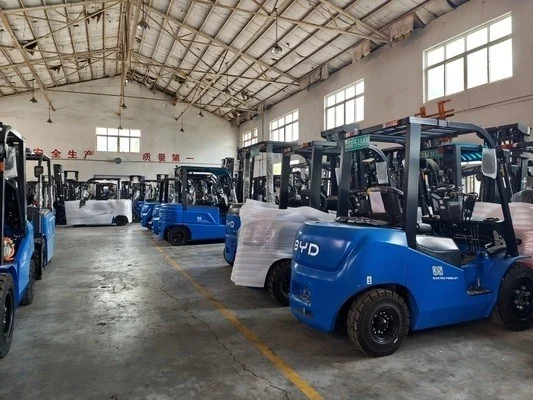
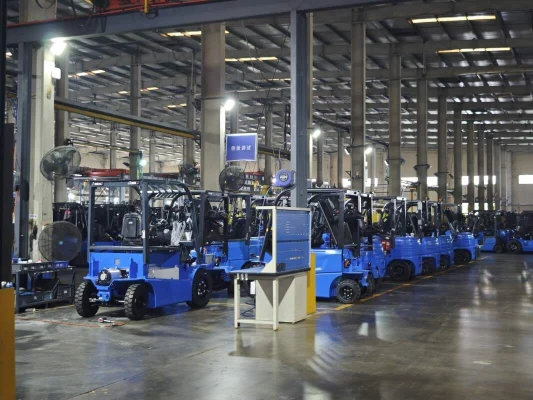
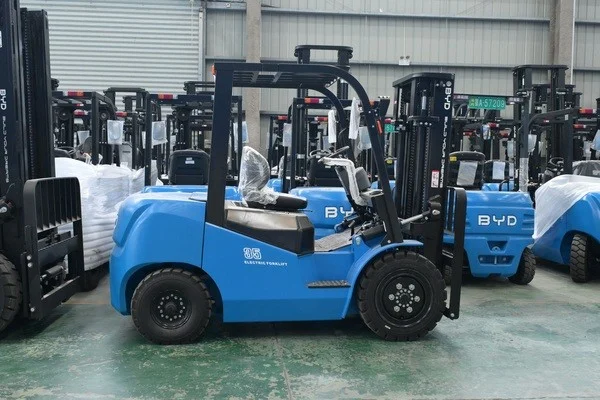
Zero Emission Forklift Specification Review: Verifying Four-Wheel Counterbalance Electric Data Before Purchase Orders
News 07/11/2026
A zero emission forklift purchase order should rest on verified documents, not a brochure headline. Before you commit, confirm that the quoted four-wheel counterbalance electric forklift matches your actual load, lift height, aisle, floor, shift pattern and charging conditions — and that every number on the data sheet is tied to a stated test condition. This review walks through the specification checks that matter, the documents to request, and the points that most often cause problems after delivery.
Start With Your Duty Cycle, Not the Data Sheet
Specification review works best in one direction: from your operation to the truck, not the reverse. Write down the real duty cycle first, because every later check depends on it.
- Load: the heaviest load you will lift, plus the attachment or pallet weight that adds to it. Note whether loads are uniform or vary widely.
- Lift height: the height you actually need at the rack beam, not the maximum the truck can reach.
- Load center: how far the load’s center of gravity sits from the fork face. A load that sits further out reduces usable capacity.
- Aisle and door width: the narrowest point the truck must pass, including any racking protrusions.
- Floor and slope: surface condition, ramps, dock plates and any gradients on the route.
- Shift pattern: hours per shift, shifts per day, and available time windows for charging.
With these figures written down, you can check each quoted value against a real requirement instead of accepting a generic configuration.
Specification Checks That Need Written Confirmation
Rated capacity and load center
Rated capacity is only meaningful at a stated load center and lift height. Ask the supplier to confirm the capacity at your required load center and height, not just the headline figure. If you use attachments, request the derated capacity that applies with that attachment fitted.
Battery, charger and charging window
A lithium battery option changes how you plan charging, but the practical questions stay the same: what charger is included, what power supply it needs, how long a full charge takes, and whether opportunity charging between shifts suits your schedule. Confirm the battery capacity and voltage quoted, the charger model, and the electrical supply requirements at your site. Treat charge-time figures as supplier data to be verified, not assumptions.
Mast, free lift and overhead clearance
Check the mast type, collapsed height, extended height and free lift against your building. Overhead obstructions such as sprinklers, doors and mezzanine edges often set the real limit. Confirm whether the quoted mast provides the free lift you need to enter racking or containers.
Dimensions and turning radius
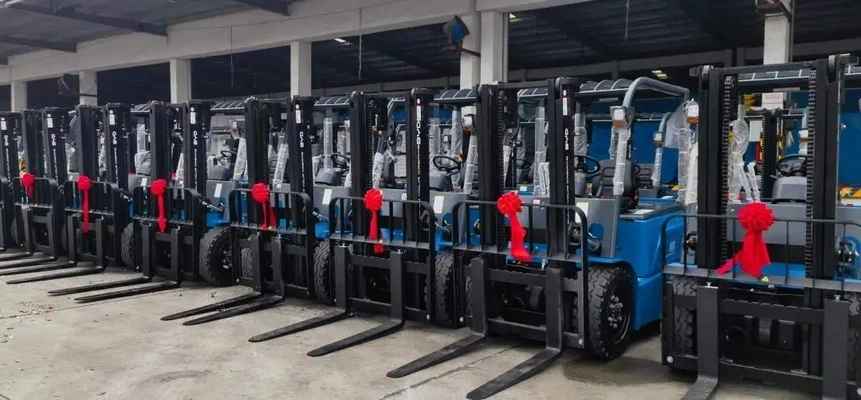
Ask for overall width, length to fork face, and turning radius, then compare them with your narrowest aisle and turning points. A truck that fits the aisle on paper can still be tight once clearance margins and operator positioning are considered.
Tyres, floor and gradeability
Tyre type should match the floor — smooth indoor surfaces and rough outdoor yards call for different choices. Confirm the gradeability figure the supplier states and the conditions it assumes, especially if your route includes a ramp or dock approach.
Performance and duty rating
Travel and lift speeds are usually quoted under specific test conditions. Ask what those conditions are before comparing trucks. Also confirm the duty rating and any continuous-use limits that apply to your shift pattern.
Documents and Questions to Settle Before the Purchase Order
A purchase order is easier to defend when the technical annex lists what was agreed. Request the following in writing:
- A specification sheet identifying the exact model, battery, charger and attachments quoted.
- Capacity ratings at your stated load center and lift height.
- Dimensional drawings showing mast height, overall dimensions and turning radius.
- Charging requirements: supply voltage, current, charger location and any ventilation or installation notes.
- Operator training and manual availability in your working language.
- Warranty terms, what is covered, and the service arrangements offered in your area.
- Delivery scope: what is included, what is excluded, and who handles commissioning.
Where a value is not documented, leave it open rather than filling the gap with an assumption. A short list of open items is normal at quotation stage; unresolved items on the final order are not.
Acceptance checks on delivery
Plan acceptance before the truck arrives. Compare the delivered model and serial details with the order, confirm battery and charger match the quotation, check capacities and dimensions against the agreed sheet, and verify that manuals and training materials are present. Record any discrepancy at handover rather than after the first shift.
An illustrative scenario
Consider a hypothetical warehouse that lifts mixed pallets to racking, works two shifts and has a ramp between the yard and the dock. The review would focus on capacity at the actual load center, mast free lift and collapsed height, tyre choice across both surfaces, gradeability on the ramp, and whether the charging window between shifts is realistic with the quoted charger. None of these conclusions can be settled from a headline capacity figure alone.
Frequently Asked Questions
What does zero emission mean in practice?
It refers to the absence of exhaust emissions at the point of use, which is why battery-electric trucks are common indoors. It does not by itself describe charging energy sources or the wider environmental impact of the site.
Can I compare two electric forklifts using brochure capacity figures?
Only with caution. Capacity depends on load center and lift height, so compare figures at the same conditions. Ask each supplier to state the conditions behind their numbers.
Which specification is most often overlooked?
Charging arrangements are a frequent gap — supply requirements, charger placement and the time available between shifts. Overhead clearance and free lift also cause surprises when a mast is taller than expected.
How should I handle missing specification data?
List it as an open item and request it before the order is finalized. If a supplier cannot document a value, treat it as unverified and decide whether your operation can accept that uncertainty.
If you are preparing an enquiry, share your load, required lift height, aisle width, floor and slope conditions, shift pattern and charging options with our team so the four-wheel counterbalance electric forklift configuration can be checked against your actual operating conditions.