Zero Emission Forklift Procurement: Matching Battery Capacity and Recharge Infrastructure to Four-Wheel Counterbalance Shift Patterns
News 31/10/2026
A zero emission forklift procurement decision rests on two linked numbers: the energy a four-wheel counterbalance electric forklift draws during a shift, and the energy your charging setup can return between shifts. Get those two aligned and the truck keeps working. Get them wrong and you either pay for battery capacity you never use or lose productive hours waiting on a charger. This guide covers the information a supplier needs, the parameters to confirm before quoting, and the points to check on delivery.
Start With the Shift Pattern, Not the Battery
Battery capacity only means something relative to duty. Two sites running identical trucks can need very different packs because one works a single shift with a long break and the other runs continuous multi-shift operation. Before comparing options, document the following.
- Shift length and count: hours per shift and shifts per day, including overtime peaks.
- Actual run time: hours the truck is moving or lifting, not simply hours on the clock. Idle time still consumes some energy but far less than traction and lifting.
- Load profile: typical and maximum load weight, plus how often the truck handles near-maximum loads.
- Lift height and duty cycle: how high loads go and how many lift cycles occur per hour.
- Route conditions: travel distance, floor surface, ramps, and doorway or aisle constraints.
- Operating environment: ambient temperature, dust, moisture, and any cold-storage work.
These inputs let a supplier estimate energy demand rather than guess. If your site runs multiple shifts, state clearly whether battery swapping, opportunity charging, or a combination is acceptable, because that choice changes both pack size and charger count.
Battery Capacity: What to Confirm Before You Compare Quotes
Capacity figures are only comparable when quoted against the same test conditions. Ask suppliers to state the nominal voltage and rated capacity, and to explain how the figure was determined. Where the manufacturer’s technical data is available, use it as the reference; do not accept a capacity number without the conditions behind it.
Questions to put to the supplier
- What nominal voltage and rated capacity does the proposed battery carry, and under what discharge conditions?
- How does the manufacturer describe usable capacity across the expected operating temperature range?
- Does the truck’s rated load capacity depend on a specific battery weight, and what happens to stability if a different pack is fitted?
- What is the recommended depth of discharge, and how does that affect the hours available between charges?
- What battery management and monitoring information is provided, and how is it read by the operator or fleet manager?
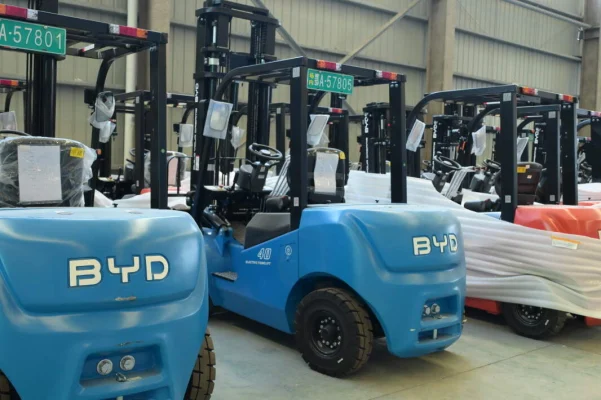
Battery weight matters on a counterbalance truck because it contributes to counterweight. A pack lighter than the design specification can change stability limits. Confirm this explicitly rather than assuming any pack of the right voltage will do.
Estimating capacity needs honestly
A defensible estimate combines measured or supplier-provided energy consumption per hour with your run-time profile, then adds a margin reflecting battery aging and cold conditions. If no measured consumption data exists, treat the estimate as provisional and plan a trial period with monitoring. Avoid accepting precise run-time promises that come without stated assumptions.
Recharge Infrastructure: Matching Chargers to the Work Pattern
Charging decisions follow from shift structure. Three common patterns appear in procurement discussions, and each implies different infrastructure.
| Pattern | Typical charging approach | Infrastructure implications |
|---|---|---|
| Single shift with a long break | Full recharge between shifts | One charger per truck may suffice; confirm charge duration against the break length |
| Two or three shifts | Opportunity charging during breaks, or battery swapping | More charging points or a swap scheme; electrical capacity and siting need review |
| Continuous or high-intensity operation | Multiple packs or fast charging, subject to manufacturer approval | Highest electrical demand; verify supply capacity and charger specifications with the supplier |
For each option, confirm the charger’s input requirements, the charging profile the battery manufacturer approves, and where charging will physically happen. Charging areas need ventilation appropriate to the technology, protection from traffic, and cable management that does not create trip or snag hazards. Also check whether your electrical supply has the spare capacity the chargers will draw at peak, since several chargers starting together can create a demand spike.
Questions to put to the supplier about charging
- Which charger models are compatible with the proposed battery, and what charge times do they achieve under stated conditions?
- Is opportunity charging permitted, and what limits apply?
- What electrical supply does each charger require?
- What routine checks and maintenance does the charging equipment need?
Acceptance Checks and Open Items to Settle Before Ordering
Procurement should end with a documented list of what will be verified on delivery and what remains unresolved. Useful acceptance items include confirming the delivered battery’s voltage, capacity, and weight against the order; checking that rated load capacity matches the configuration supplied; verifying charger compatibility and that charge times meet the agreed pattern; and confirming operator training on charging procedure and daily checks.
Open items commonly needing resolution include the final charger count and siting, electrical supply upgrades, spare pack arrangements if swapping is planned, and the warranty terms covering battery and charger. Ask the supplier to state these in writing rather than relying on verbal assurances.
To move a quote forward, send your shift pattern, typical and maximum loads, lift heights, aisle and floor conditions, and available charging time and space. With those details, a supplier can propose a four-wheel counterbalance electric forklift configuration and charging arrangement that fits the work rather than a generic package.
Frequently Asked Questions
Can one battery last a full multi-shift day?
It depends on energy consumption and pack size, and no general answer applies. Multi-shift operation usually requires opportunity charging, a second pack, or both. Ask the supplier to estimate run time from your actual duty cycle and to state the assumptions behind that estimate.
Is opportunity charging always acceptable?
Not necessarily. Whether partial charging between breaks is permitted depends on the battery technology and the manufacturer’s instructions. Confirm approval in writing before building a work pattern around it.
What if my electrical supply cannot support the chargers?
This is a common constraint in older buildings. Establish the chargers’ supply requirements early, then discuss options such as staggered charging schedules or a supply upgrade with your electrical contractor before committing to a truck order.
How do I verify capacity claims at delivery?
Compare the battery label and documentation against the ordered specification, and confirm the load capacity stated on the truck’s data plate matches the fitted configuration. If anything differs, raise it before accepting the unit.