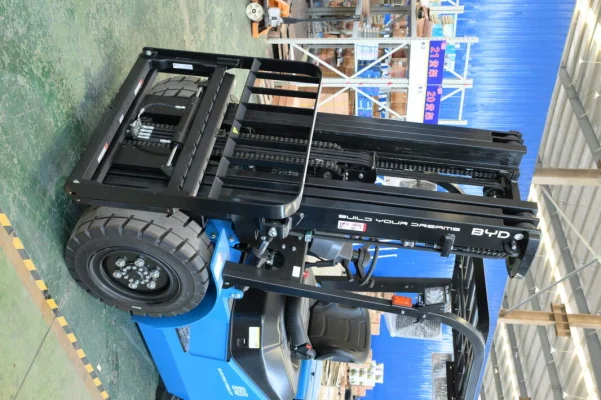
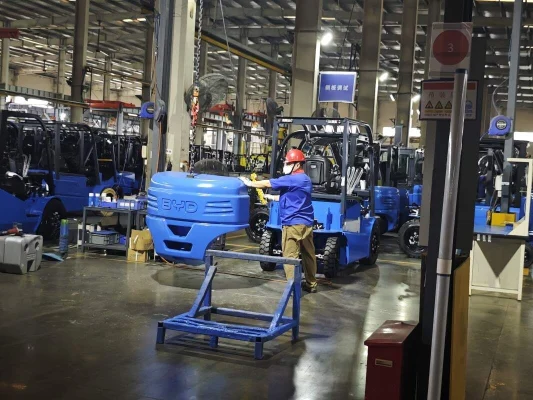
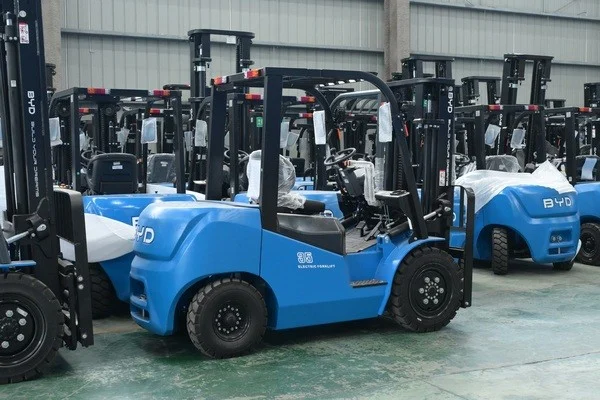
How Battery Technology Shapes BYD counterbalance forklift Total Cost of Ownership
News 09/10/2026
Most fleet managers focus on upfront equipment costs when evaluating new material handling vehicles, but long-term total cost of ownership (TCO) determines actual operational spending. Battery technology stands as one of the largest drivers of TCO variation across electric forklifts, especially within BYD counterbalance forklift lines, which rely on proprietary lithium iron phosphate (LFP) battery designs that differ dramatically from traditional lead-acid alternatives.
Core Connections Between Battery Technology and Forklift TCO
TCO accounts for every cost associated with a forklift from purchase through decommissioning. Upfront purchase, energy use, maintenance, downtime, replacement parts and end-of-life value all contribute to final TCO calculations. Battery design directly impacts every one of these cost categories, making it a critical evaluation point when selecting new equipment.
Key BYD Counterbalance Forklift Battery Design Features
LFP Chemistry Base
BYD uses its own in-house produced LFP batteries across all its electric counterbalance forklift lines. LFP chemistry eliminates cobalt content, reducing raw material costs compared to other lithium-based chemistries. It also offers higher thermal stability than NMC or NCA chemistries, lowering risk of thermal runaway and improving on-site safety.
Integrated Battery Management System (BMS)
BYD builds custom BMS into every battery pack, which monitors cell voltage, temperature and state of charge in real time. The system optimizes charging cycles to prevent overcharging or deep discharging, two common causes of premature battery capacity loss. This active management preserves cell health over thousands of charge cycles.
Opportunity Charging Capability
Unlike traditional lead-acid batteries that require full discharge before recharging to preserve capacity, BYD LFP batteries support partial charging during break periods without long-term degradation. This design eliminates requirements tied to battery swapping stations and extra spare battery packs, freeing up warehouse space and reducing extra capital spending.
How BYD Battery Design Impacts Key TCO Components
Upfront Capital Cost
BYD counterbalance forklifts carry higher upfront purchase prices than comparable lead-acid electric forklifts. However, they eliminate requirements tied to separate spare batteries, charging rooms and ventilation systems that lead-acid units require. When including these additional infrastructure costs, initial total investment often falls within 10% of lead-acid options across most small to mid-sized fleets.
Ongoing Energy Costs
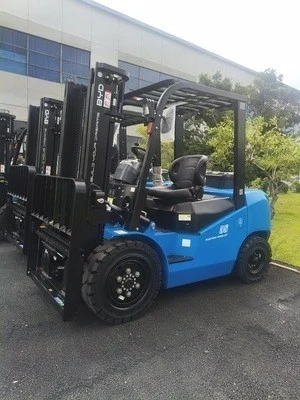
LFP batteries have higher charge efficiency than lead-acid alternatives, meaning more energy from the grid converts to usable power used in lifting and travel. Operations report lower monthly energy bills compared to equivalent lead-acid forklifts completing the same work. Opportunity charging also reduces energy waste from inefficient full charge cycles common with lead-acid technology.
Maintenance and Downtime Costs
Lead-acid batteries require regular watering, equalization charging and cleaning to remove corrosion, all of which add labor hours and maintenance costs. BYD LFP batteries need no regular maintenance beyond periodic visual inspections. The longer service life also eliminates downtime associated with battery replacement, a major expense affecting fleets running multiple daily shifts.
End-of-Life Value
LFP chemistry supports recycling of most battery components, and BYD offers established take-back programs covering used packs in most regions. Retired packs can also find second use as stationary energy storage units, adding residual value that lead-acid batteries rarely match. The longer battery service life also means the entire forklift can stay in service longer, extending asset life and reducing frequency of new equipment purchases.
Application Guidance and Selection Tips
BYD counterbalance forklift battery technology delivers the largest TCO savings under specific operating conditions:
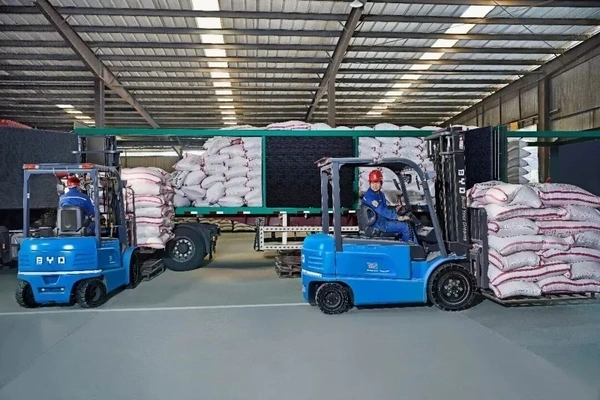
- Multi-shift operations: Opportunity charging eliminates battery swapping, so multi-shift fleets see major downtime and labor savings
- Indoor warehouse use: Zero tailpipe emissions and low noise levels create safer work environments without additional ventilation needs
- Operations with limited space: No requirements tied to dedicated charging rooms or spare battery storage frees up valuable warehouse space
When evaluating a BYD counterbalance forklift to add to your fleet, calculate full TCO across a 5 to 10 year ownership period instead of only comparing upfront purchase prices. This accounting method reveals actual long-term savings potential.
Known Limitations
BYD battery technology does not deliver optimal TCO across all operation types. Consider these key limitations before purchasing:
- Extreme temperature operation: Temperatures above 45°C (113°F) or below -10°C (14°F) accelerate capacity loss, reducing battery service life and increasing long-term costs
- Low-intensity use: Operations that run less than one shift per week often see slower payback on the higher upfront investment, so lower-cost lead-acid options may deliver better TCO in these cases
- Limited third-party service: Independent repair shops often lack training and parts matching BYD battery systems, so owners typically rely on authorized BYD service to address major repairs
Frequently Asked Questions
What is the expected service life of a BYD counterbalance forklift battery?
BYD publishes official LFP battery cycle ratings matching 10,000 full charge cycles under standard operating conditions. Actual service life varies based on operating temperature, charging habits and load intensity. Owners commonly see 7 to 10 years of regular use before capacity drops below 80%, far longer than traditional lead-acid batteries that typically need replacement after 3 to 5 years.
Do BYD counterbalance forklift batteries work in cold storage environments?
BYD integrates thermal management into its battery design, but extreme cold below -10°C (14°F) still reduces available capacity and increases charge times. Operations in cold environments need scheduled pre-charge warming to maintain consistent performance, which adds small incremental energy costs.
How does battery technology impact resale value of BYD counterbalance forklifts?
LFP batteries retain capacity longer than lead-acid alternatives, so used BYD counterbalance forklifts hold higher market value compared to equivalent lead acid models. Buyers often pay a premium because they avoid immediate battery replacement costs.
Can I replace a BYD counterbalance forklift battery with a third-party unit?
BYD designs battery packs specifically around its counterbalance forklift chassis and control systems. Third-party replacement batteries often lack matching BMS integration, which can compromise safety and performance. Most authorized BYD service centers supply original replacement packs when needed.
Final Takeaways
Battery technology is the single largest factor shaping BYD counterbalance forklift total cost of ownership. The proprietary LFP design delivers significant long-term savings to most high-intensity material handling operations, but higher upfront costs and temperature limitations mean it may not suit every use case. Fleet managers should calculate full TCO across the entire expected asset life to confirm alignment with their specific operational needs before making a purchasing decision.