Specifying BYD counterbalance forklift Hydraulic and Drive Configurations: A Technical Buyer’s Comparison Guide
News 30/10/2026
A BYD counterbalance forklift can be ordered with more than one hydraulic and drive arrangement, and the differences matter long before the truck reaches your floor. Hydraulic configuration decides how smoothly and precisely loads are raised, lowered and tilted; drive configuration decides how the truck accelerates, climbs and manages energy across a shift. Neither choice has a universal winner. The right combination depends on load weight, lift height, attachment use, aisle and floor conditions, ramp grades, shift length and charging routine. This guide compares the main options along consistent dimensions so you can ask sharper questions and confirm specifications against the manufacturer’s technical data.
What the Hydraulic Configuration Actually Controls
The hydraulic system covers lift, lower, tilt and any attachment function. On a four-wheel counterbalance electric forklift, the practical differences between configurations usually show up in three places: control feel, heat management during repeated cycles, and the way lift speed behaves as the load approaches rated capacity.
Buyers typically encounter two broad approaches. One uses conventional valve control with fixed flow characteristics. The other uses load-sensing or electronically managed flow, which adjusts delivery to the demand of the moment. The table below compares them on dimensions that matter during evaluation, not on claimed superiority.
| Dimension | Conventional fixed-flow hydraulics | Load-sensing or electronically managed hydraulics |
|---|---|---|
| Control feel at low speed | Depends heavily on valve tuning and operator technique | Generally more consistent because flow follows demand |
| Repeated high-cycle work | Oil heating can build during sustained lifting and tilting | Reduced wasted flow can limit heat build-up, but the exact effect depends on duty cycle |
| Attachment integration | Requires careful valve and flow matching | Often easier to tune when several functions run together |
| Diagnostics | Mechanical checks, simpler to service in basic workshops | May need electronic diagnostics and trained technicians |
| Best fit | Steady, moderate cycles with predictable loads | Mixed loads, frequent attachment use, precise positioning |
Do not accept a lift speed figure without the conditions behind it. Ask whether the rating was measured at rated load, at what lift height, at what hydraulic oil temperature and with which attachment fitted. Those variables change the answer more than the brochure headline does.
Drive Configuration: Comparing the Practical Options
Drive configuration on a four-wheel counterbalance electric forklift is usually discussed in terms of motor type, transmission arrangement and control strategy. The comparison below stays at the level a buyer can verify from datasheets and a demonstration.
AC drive with a conventional differential
This is a common baseline arrangement. It offers predictable acceleration, straightforward service access and good traction on firm, dry floors. On ramps, the operator feels grade resistance directly, and the controller limits torque according to its settings. It suits warehouses with level floors and moderate travel distances.
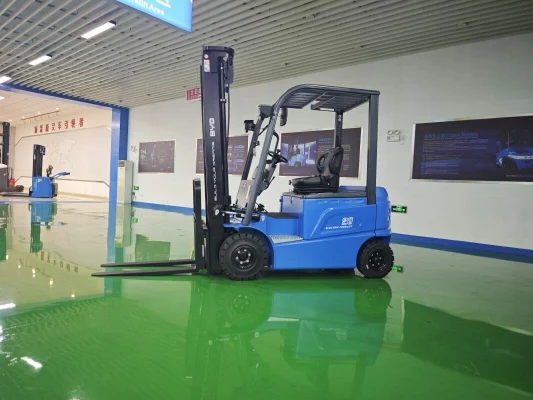
AC drive with electronic traction control
Electronic management can reduce wheel spin on damp or dusty surfaces and smooth deceleration when the operator releases the pedal. The benefit is real but conditional: it depends on tyre type, floor condition and how the controller is programmed. Ask which parameters are adjustable and whether your site can support the diagnostic tools needed to adjust them.
Drive and hydraulic power sharing
When a truck lifts and travels at the same time, the controller allocates power between drive and hydraulic demands. Some configurations prioritise travel speed; others prioritise lift response. If your operation combines travel with lifting, such as stacking at the end of a long run, ask how the truck behaves under combined demand rather than judging each function separately.
Regenerative braking is another point to clarify. Many electric trucks recover energy during deceleration, but the amount recovered depends on route profile, stop frequency and battery state. Treat any recovery claim as conditional until the manufacturer states the test conditions.
Matching Configurations to Load, Height and Site Conditions
Configuration choices should follow the duty, not the other way round. Work through the following conditions before comparing options.
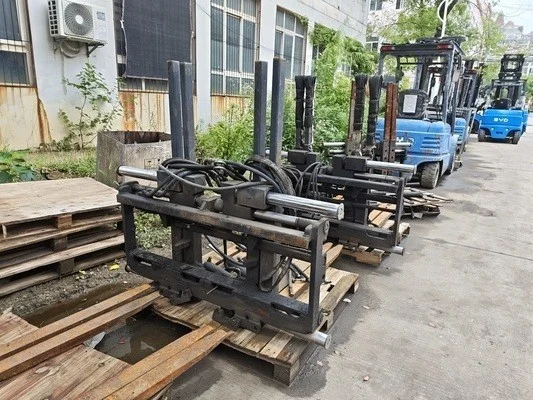
- Load and load centre: Confirm rated capacity at the actual load centre you will use, not just the headline capacity. Attachments shift the load centre and reduce usable capacity.
- Lift height: Higher lifts increase hydraulic demand and change stability margins. Check capacity at maximum height, not only at ground level.
- Ramp grade and floor surface: Slopes affect traction and energy draw. Confirm the maximum grade the truck is rated to climb with your load.
- Aisle width and turning: Four-wheel counterbalance trucks need more turning space than three-wheel designs. Measure your narrowest aisle and confirm the truck’s dimensions.
- Shift length and charging: Battery capacity, opportunity charging and break patterns determine whether the truck completes the shift without a battery change.
- Environment: Dust, moisture, cold storage or food handling may require specific sealing, lubrication or component options.
A hypothetical application illustrates the trade-off. A mid-sized distribution centre moves palletised goods at heights up to several metres, on level concrete, across two shifts with a charging window at break times. Here, a load-sensing hydraulic arrangement and electronic traction control may help with precise stacking and consistent control, but the buyer should still verify cycle times at rated load and confirm the charger and battery plan support the shift pattern. In a second scenario, a workshop moves uneven loads short distances on a slightly sloped floor. The simpler fixed-flow arrangement may be easier to maintain, provided the ramp grade and load centre are within the truck’s rating.
These are illustrative scenarios, not measured results. Your own duty cycle data should drive the final specification.
Information to Confirm Before You Order
A configuration is only as good as the data behind it. Before committing, request and cross-check the following from the supplier.
- Rated capacity at the load centre and lift height you will actually use.
- Hydraulic pressure and flow ratings, plus the oil cooling arrangement and duty rating.
- Drive motor rating, controller type and adjustable parameters.
- Maximum gradeability with load, and the test conditions behind the figure.
- Battery type, capacity, voltage and recommended charging profile.
- Attachment compatibility, including any derating that applies.
- Service access points, diagnostic requirements and technician training needs.
- Warranty terms specific to hydraulic and drive components.
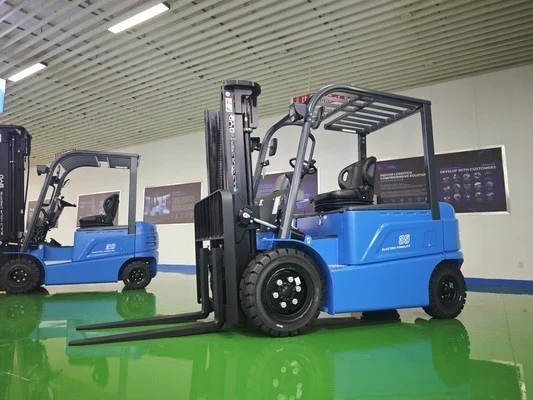
Where a datasheet omits a figure, ask directly rather than assuming a value. If a supplier cannot state the test conditions behind a performance claim, treat that claim as unverified. Share your actual load weights, lift heights, aisle dimensions, floor conditions, ramp grades and shift pattern with the supplier so the recommended configuration reflects your operation. Buyers evaluating a BYD counterbalance forklift should ask which hydraulic and drive options are available within the four-wheel counterbalance electric range and how each option affects rated capacity and service requirements.
Frequently Asked Questions
Does a more advanced hydraulic configuration always improve productivity?
No. Load-sensing or electronically managed hydraulics can improve control consistency and heat management in demanding cycles, but the benefit depends on duty cycle, operator skill and maintenance capability. Simple fixed-flow systems can be entirely adequate for steady, moderate work.
Can I change the drive configuration after delivery?
Drive and hydraulic configurations are generally specified at order because they involve controller programming, component matching and sometimes structural differences. Retrofitting is usually limited and should be confirmed with the manufacturer rather than assumed.
How do attachments affect the hydraulic specification?
Attachments add weight and shift the load centre forward, which reduces usable capacity. They also add hydraulic circuits and flow demand. Provide the attachment model and weight to the supplier so the truck’s capacity rating and hydraulic flow can be checked together.
What should I measure on a demonstration truck?
Measure lift and lower times with your typical load, observe control smoothness during precise positioning, test travel on your actual floor and ramp conditions, and note energy consumption over a representative period. Compare results against the datasheet conditions, not against another brand’s marketing figures.