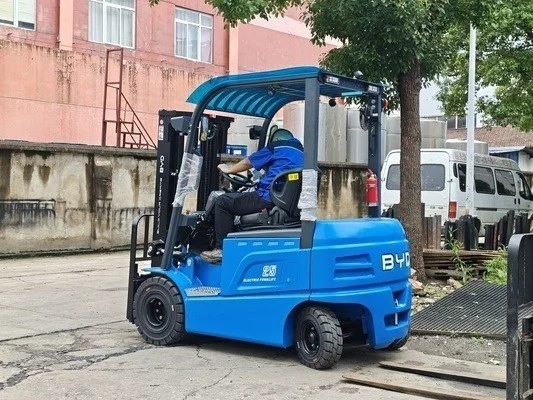
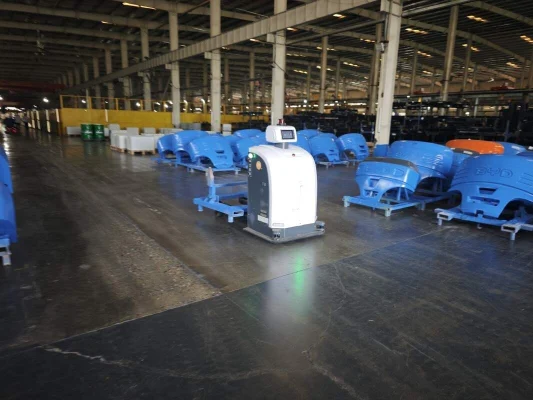
Specifying Four-Wheel Counterbalance Electric Forklifts: Matching Battery Capacity and Charging Windows to Warehouse Shift Patterns
News 03/11/2026
An electric forklift warehouse buyers can rely on is not the one with the largest battery on the datasheet. It is the one whose usable energy matches the work a shift actually demands, and whose charging windows fit the breaks the operation can realistically offer. Four-wheel counterbalance electric forklifts sit at the centre of most warehouse and dock fleets, and their battery and charging plan is where specification errors become expensive. This guide walks through the practical sequence: quantify work, convert it to energy demand, compare that demand with the battery and charger options the manufacturer documents, then check the result against your real shift pattern.
Start with the Work Cycle, Not the Battery Label
Battery capacity only means something relative to the load it must deliver. Before comparing ampere-hours or charger ratings, describe a typical shift in operational terms. Useful inputs include the number of trucks in service, hours each truck is actually running, average and peak loads, lift heights, travel distances, and how much time is spent idling with the operator away from the machine.
A structured worksheet keeps the estimate honest. The following are the parameters worth recording; the values themselves must come from your own operation or the manufacturer’s technical documentation, not from general rules of thumb.
- Shift length and structure: total hours, scheduled breaks, and whether trucks run continuously or in bursts.
- Duty intensity: loads moved per hour, average travel distance per move, and average lift height.
- Load profile: typical and maximum load weight, and whether loads sit near the rated capacity.
- Environment: floor condition, ramps or gradients, aisle width, and ambient temperature.
- Charging opportunity: where the truck parks, how long it stands idle, and whether the charging point is accessible during breaks.
Two trucks with identical hourly throughput can still place very different demands on a battery if one lifts to racking at height all shift and the other works mostly at floor level. Lifting, lowering, travel, and any hydraulic attachments all draw energy, so the duty cycle matters more than the headline load figure.
Turning Duty Data into a Battery and Charging Requirement
The bridge between work and specification is the manufacturer’s energy consumption data, usually expressed per hour under defined test conditions. Ask the supplier which duty cycle those figures assume and how they scale with load and lift height. Only then can you compare the documented consumption with the battery capacity on offer and decide whether one battery covers a full shift or whether opportunity charging is needed.
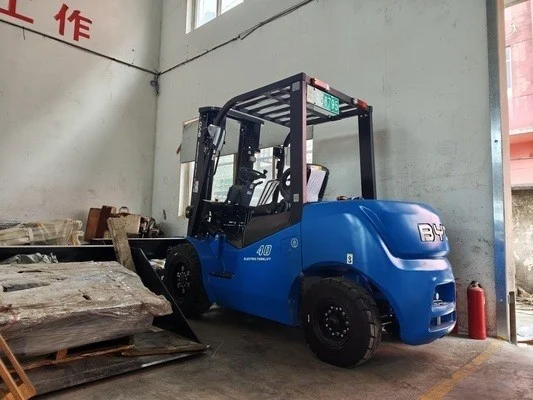
Reading the Battery and Charger Specification Correctly
Battery capacity is normally stated in ampere-hours at a defined voltage, and the usable portion is smaller than the nominal figure. Charger output is stated in amperes or kilowatts, and charge time depends on both the charger and the battery’s state of charge and chemistry. Do not assume a nominal capacity translates directly into a full shift of runtime. Ask the supplier to confirm the expected runtime under your duty profile, and to state the assumptions behind that estimate.
Lithium-ion packs behave differently from lead-acid in ways that affect scheduling. They generally accept opportunity charging without the same restrictions on partial charging, and they do not require the same watering routine. Those are general characteristics of the chemistry; the specific charging profile, permitted partial-charge behaviour, and any limits on charge cycles must come from the battery and truck documentation supplied with the product.
Matching Charging Windows to Shift Structure
Charging windows are the periods when a truck is parked and the charger is free. Map them before choosing equipment. A single-shift operation with a long overnight window can often plan around one charge per truck per day. Multi-shift operations with short handover gaps need either a larger battery, opportunity charging during breaks, or a battery exchange arrangement.
| Shift pattern | Charging window typically available | Specification question to resolve |
|---|---|---|
| Single shift, long overnight stop | Several uninterrupted hours | Does one full charge cover the measured daily energy demand? |
| Two shifts, short handover | Brief break plus partial overnight | Can opportunity charging during breaks keep the state of charge above the minimum the supplier specifies? |
| Continuous or three-shift operation | Only short, frequent stops | Is a larger battery, battery exchange, or dedicated charging infrastructure required? |
The table is a planning framework, not a recommendation of specific capacities. The figures that fill it come from your measured duty data and the supplier’s documented consumption and charging specifications. Where those documents are silent, request the missing data rather than assuming a value.
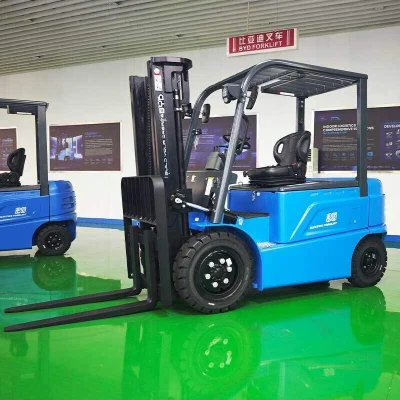
Where Four-Wheel Counterbalance Trucks Fit
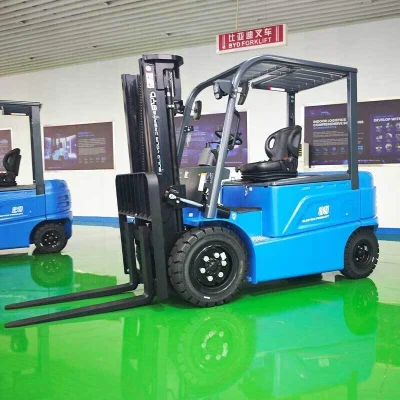
Four-wheel counterbalance electric forklifts are a common general-purpose choice in warehouses, docks, and mixed indoor-outdoor transfer work because their layout supports stable lifting at load centres and their weight distribution suits heavier loads. That does not make them the right answer everywhere. Narrow aisles, very high lift heights, and tasks dominated by horizontal transport may point toward other equipment categories, and a balanced assessment should compare the aisle width, lift height, and duty cycle against what a counterbalance truck can do safely.
When the counterbalance format is the right fit, the specification work reduces to matching load capacity, lift height, load centre, and battery configuration to the measured duty cycle. Ask the supplier to confirm each figure against the technical documentation, and request a runtime estimate tied to your own shift data rather than a general claim.
Common Specification Mistakes
- Choosing battery capacity from a nominal runtime figure without checking the duty cycle behind it.
- Planning charging around ideal breaks that the operation rarely takes.
- Ignoring how lift height and attachments change energy consumption.
- Assuming a charger can serve more trucks than its output and connection capacity allow.
- Leaving battery exchange or additional charging points out of the layout plan until after the trucks arrive.
Frequently Asked Questions
How do I estimate the battery capacity a four-wheel counterbalance electric forklift needs?
Start with measured duty data: hours running, loads per hour, lift heights, and travel distance. Ask the supplier to convert that profile into an energy estimate using their documented consumption figures, then compare the result with the battery options they offer. Without that documented conversion, any capacity figure is a guess.
Can opportunity charging replace a larger battery?
Sometimes, but it depends on the chemistry, the charger, and the length and frequency of the available windows. Lithium-ion packs generally tolerate partial charging better than lead-acid, but the permitted charging behaviour and any cycle limits must be confirmed in the battery documentation. If the windows are too short or too infrequent, a larger battery or a battery exchange plan may be the more reliable route.
What information should I give a supplier when requesting a quote?
Provide shift length and structure, loads moved per hour, average and maximum load weight, lift heights, aisle widths, floor and ramp conditions, ambient temperature, and the charging points available. Also state how many trucks will share each charger. These details let the supplier propose a configuration and a charging plan that can be checked against the technical documentation.
Does a larger battery always mean longer runtime?
Not automatically. Runtime depends on the energy the truck actually consumes, the usable portion of the battery, and the conditions of use. A larger pack adds weight and may affect the truck’s configuration, so the choice should follow the measured duty cycle and the manufacturer’s documented specifications rather than a simple preference for more capacity.
Before committing, verify the documented consumption figures, the battery’s permitted charging profile, the charger output, and the layout of charging points against your real shift pattern. Where any of those details are missing, request them from the supplier and leave the specification open until they are confirmed.