How Component Quality Impacts Forklift Trucks Total Cost of Ownership Across Daily Industrial Operations
News 09/10/2026
Many operations leaders focus on upfront purchase price when selecting new forklift trucks or replacement components, but long-term total cost of ownership (TCO) determines actual spending across the equipment lifespan. Component quality acts as one of the biggest hidden drivers of TCO, affecting everything from unplanned downtime to maintenance labor and fuel efficiency. This guide breaks down key connections between component quality and operating costs, with actionable guidance toward better purchasing decisions.
Core Connections Between Component Quality And Long-Term Forklift TCO
TCO includes all costs tied to a forklift from purchase through retirement: upfront purchase price, maintenance, repairs, downtime, labor, fuel or energy use, and end-of-life disposal. Component quality impacts every category beyond initial purchase price.
Upfront Cost Vs Lifetime Spending
Low-quality components almost always carry lower upfront prices. These savings disappear quickly when components wear out faster or cause damage to other connected systems. A cheap hydraulic seal, for example, costs far less upfront than a premium option, but a leak can damage entire hydraulic system components and force days of unplanned downtime that costs far more than the original price difference.
In high-intensity daily operations, this cycle repeats with every failed component, adding thousands in unexpected costs over the forklift’s lifespan.
High-Impact Components That Drive TCO Changes
Not all components deliver equal TCO impact from quality improvements. These categories see the most significant changes when you upgrade component quality:
Powertrain And Hydraulic System Parts
These systems form the core of forklift operation. Low-quality bearings, seals, or pump components wear quickly, leading to inefficient operation and unexpected failures. Worn parts increase friction, which raises fuel or energy consumption and adds strain to other connected components, accelerating their wear as well.
Tires And Brake Components
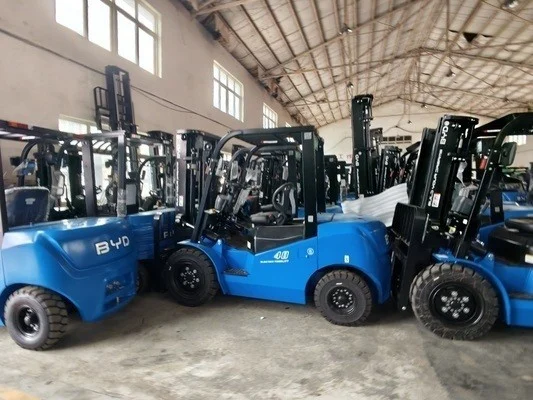
Tires directly affect traction, energy efficiency, and overall vehicle stability. Low-quality tires wear out much faster in industrial environments with rough concrete, debris, or frequent tight turning. Premature tire replacement adds material and labor costs, and underinflated or worn tires increase fuel use and strain on the drivetrain. Brake components also directly impact workplace safety; failed brakes can cause serious accidents that lead to costly downtime and liability.
Electrical And Control System Components
Modern forklift trucks rely on sensors, controllers, and wiring to manage operation. Low-quality electrical components deliver inconsistent performance, give incorrect operating data, and fail suddenly in temperature extremes common in warehouses or outdoor yards. Unexpected shutdowns stop entire work processes until repairs complete.
Hypothetical Application Scenario
This common industry scenario illustrates TCO impacts clearly: A 20-unit fleet supports a third-party logistics warehouse running two daily shifts. The fleet splits its component replacement strategy: 10 units use consistently high-quality OEM or verified aftermarket components, while the other 10 use the lowest-cost available components whenever replacements occur.
Over three years of operation, the low-cost group sees 25-30% more unplanned maintenance stops, and service labor hours run 20% higher than the high-quality group. Higher frequency of component replacements also means more time spent off the floor moving goods, leading to reduced operational output that requires additional overtime or extra equipment to meet delivery targets. The total annual TCO difference between the two groups regularly puts the low-cost strategy at a net financial disadvantage, even with lower initial component spending.
Selection Guidance And Key Limitations
High component quality does not fit every operation. These guidelines help you match choices to your specific needs:
Match Quality Level To Operation Intensity
If your operation runs only one shift per week in a light manufacturing or retail setting, low-cost components may meet your needs without significant TCO increases. If you run multiple shifts daily in a harsh environment like a lumber yard, port, or high-volume distribution center, high-quality components deliver clear long-term savings.
Track Your Own Fleet Data
No universal rule works for all fleets. Track downtime, replacement frequency, and service labor costs per forklift to identify patterns that show which component strategy delivers the lowest TCO your specific use case.
Recognize Existing Limitations
High-quality components carry higher upfront costs, so you need sufficient capital budget to support the switch. Some niche or older forklift models only have low-cost aftermarket components available, so you must plan for more frequent service and downtime when operating older equipment.
Frequently Asked Questions
Do all forklift components need equal quality levels?
No. High-wear components like tires, brake pads, and hydraulic seals see the biggest TCO impact from higher quality. Low-wear static components like body panels rarely drive enough cost change to justify premium pricing across most operations.
Can aftermarket components match OEM component quality?
Some aftermarket manufacturers produce components that match or exceed OEM quality standards. You must verify manufacturer specifications and performance claims before purchasing, rather than assuming all aftermarket options fall below OEM quality.
How can fleet managers justify higher upfront component costs?
Managers build business cases by comparing projected lifetime costs. Calculate expected replacement frequency, downtime costs, and service labor to show long-term savings offset higher initial purchase prices.
Does component quality replace routine maintenance?
No. Component quality affects base lifespan, but regular scheduled maintenance extends life of any component. Even high-quality components fail prematurely without proper care, so maintenance routines remain critical to achieving low TCO.
Conclusion
Component quality remains one of the most underrated factors affecting total cost of ownership of forklift trucks across daily industrial operations. By focusing on lifetime costs instead of only upfront pricing, prioritizing quality improvements in high-wear high-impact components, and matching choices to your operation intensity, you can reduce long-term spending and improve operational reliability.